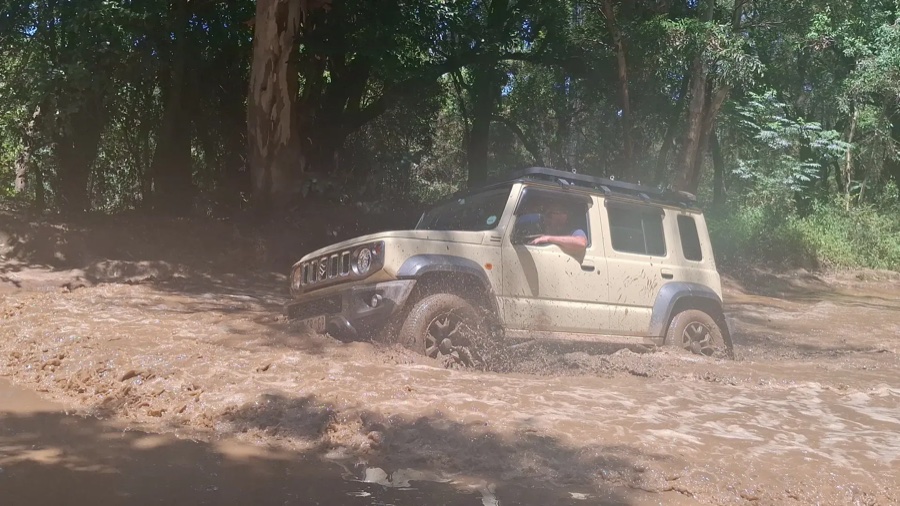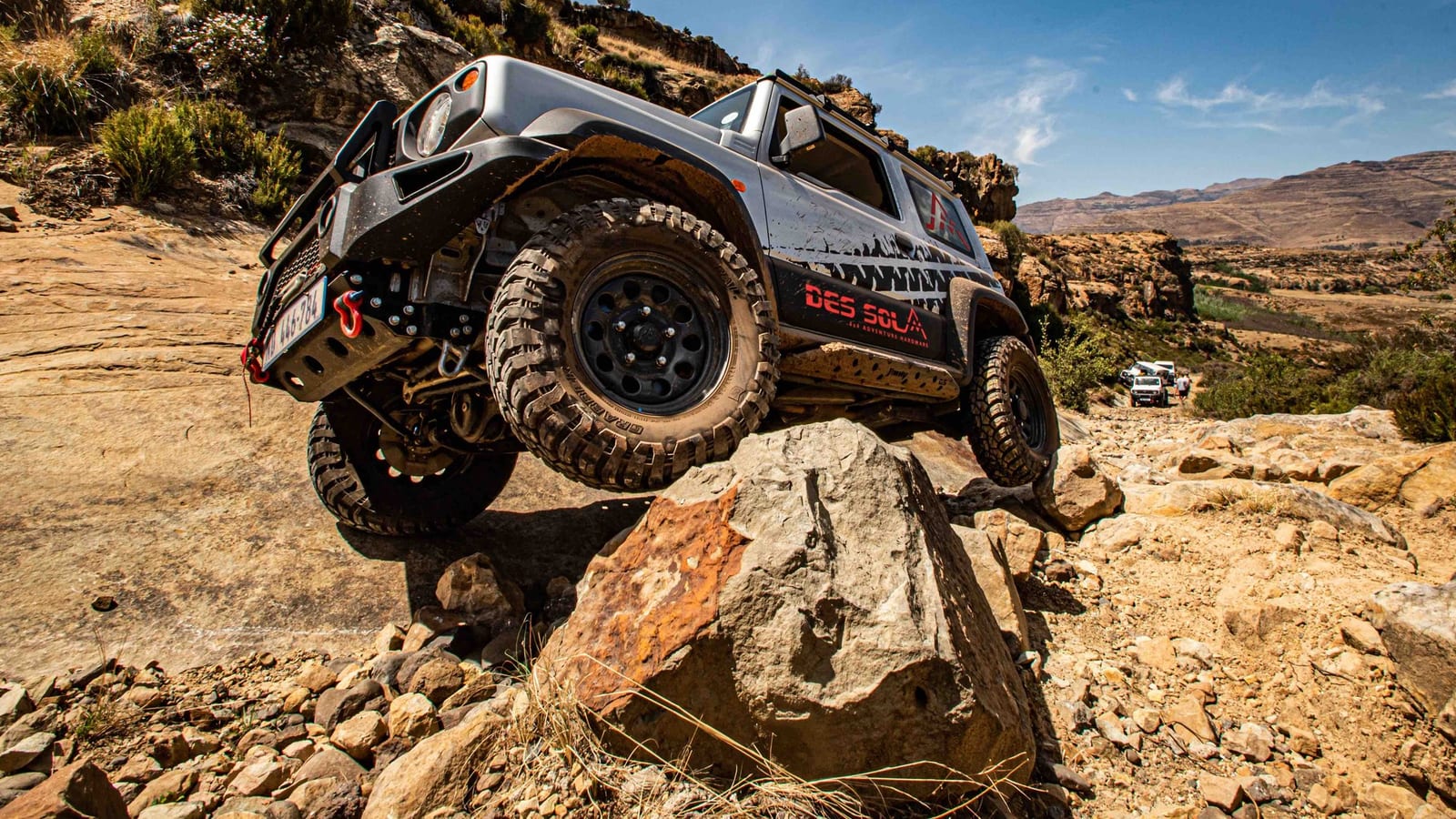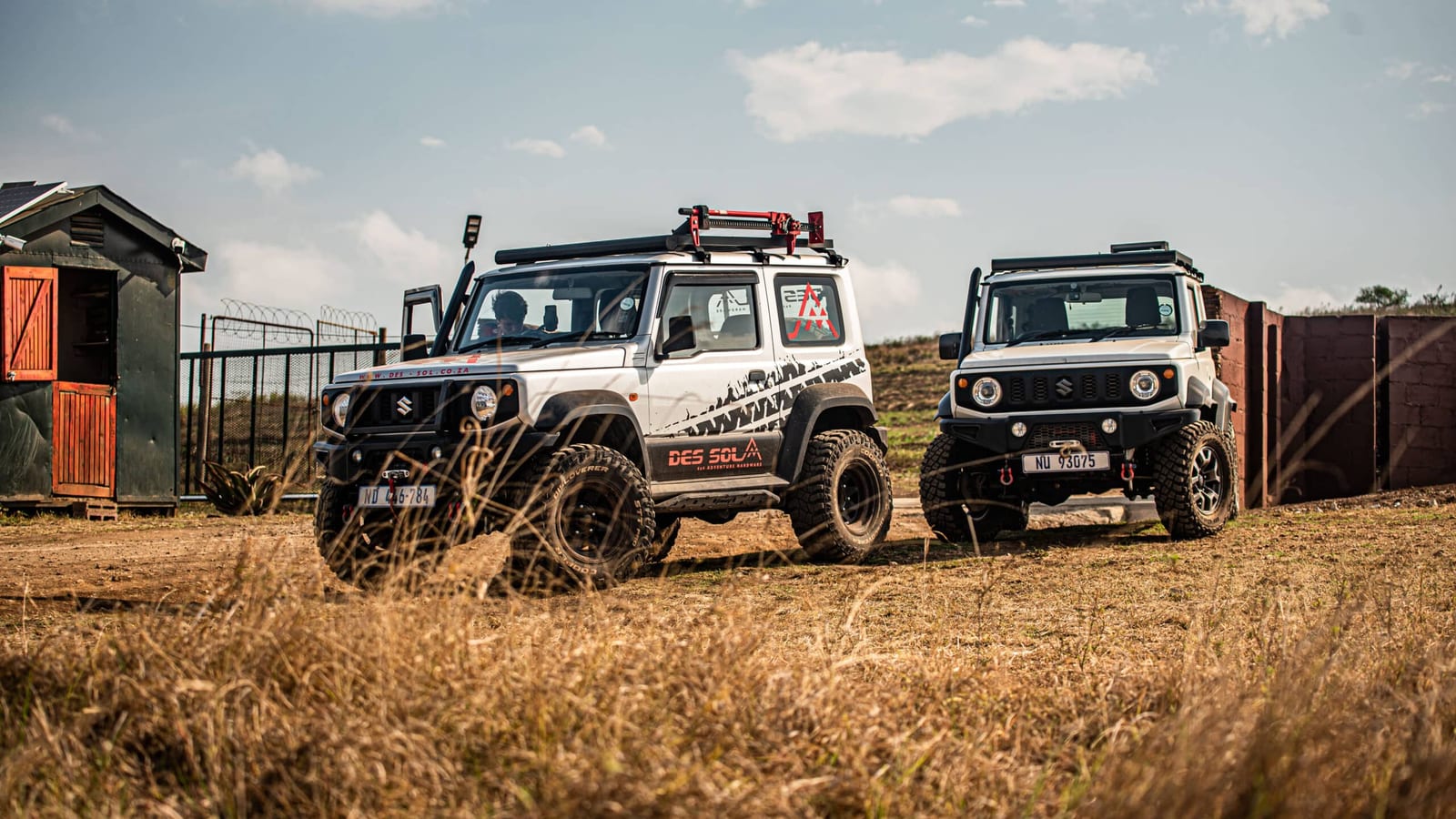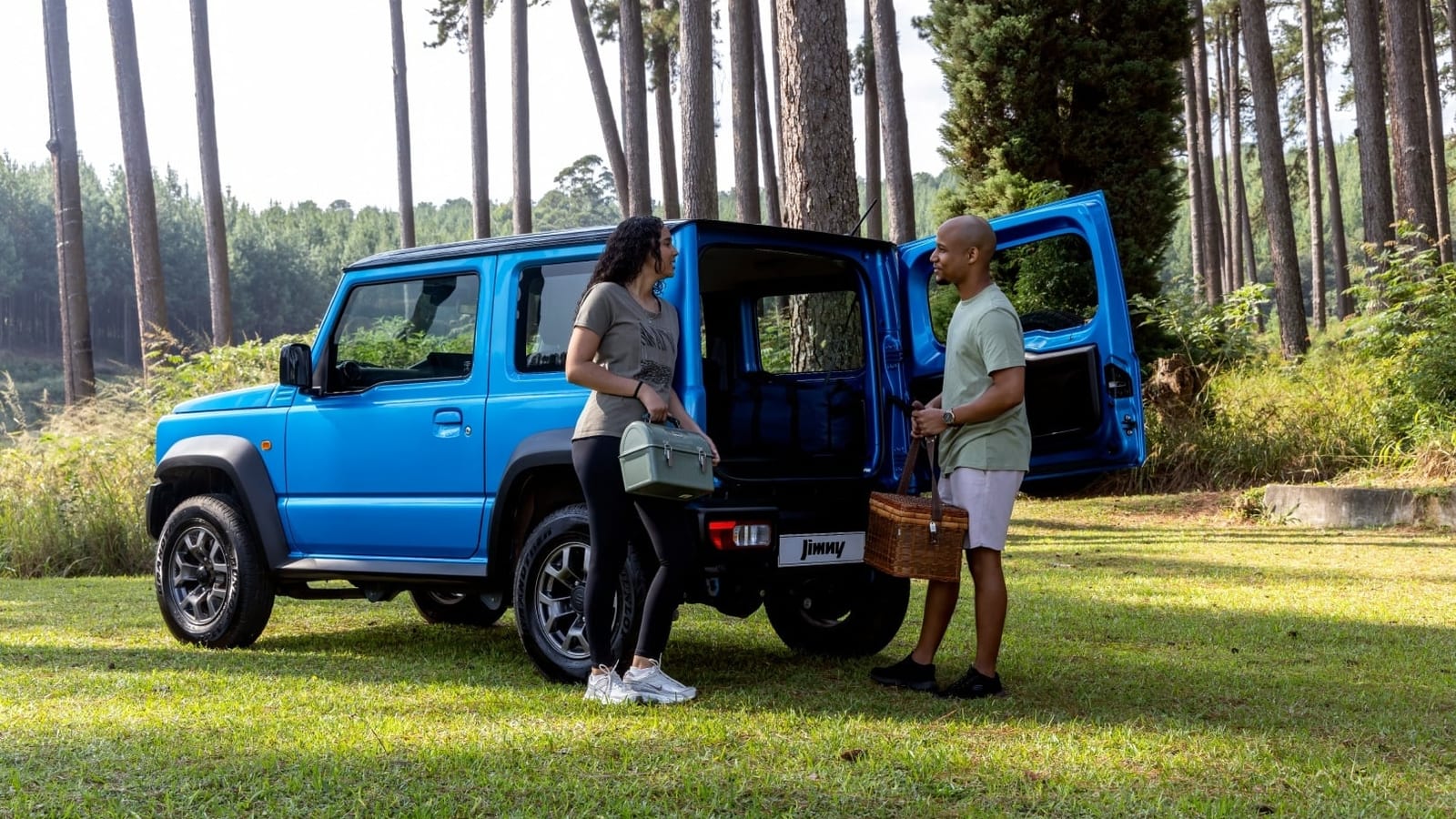
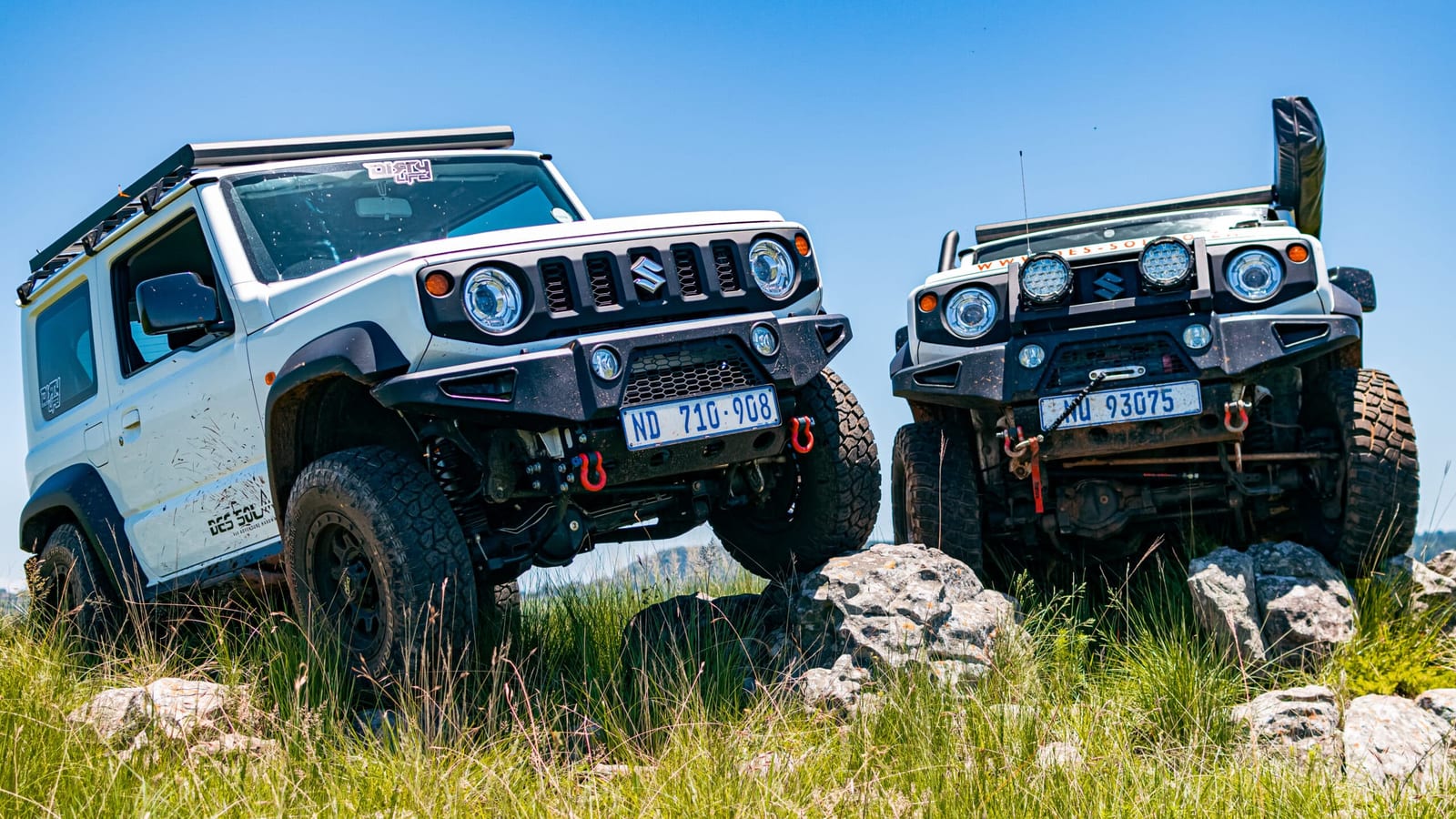
Cover photo: Des Sol, the Pinetown team who design and weld Jimny steel in KwaZulu-Natal, and who shoot their own builds on real rocks. Thank you, Des Sol.
Ask a room of South African Jimny owners what protection to buy first. The answer is not a bull bar. It is a few small steel guards under the car. They cover the transfer case and the mounts where the suspension arms bolt on. Those are the parts that end a trip when they break. Sliders come next, to save the plastic sills. Bumpers come last: for a winch, for recovery points, for the look, or to make room for 235 tyres.
Here is the other truth. Most Jimnys never touch a rock. So this guide starts with what you may not need. Then it goes piece by piece: what each part saves, costs and weighs, and what the road rules say.
The prices in the tables were seen on each store’s own page on 23 September 2026. They include VAT and leave out fitting. The live boxes along the way show today’s prices, and so do our protection and bumper pages.
The short answer
- Tar and good gravel: you need nothing. A nudge bar is a look, not protection.
- Gravel passes and farm tracks: small guards for the suspension mounts first, then guards for the diffs.
- Rocky trails and club days: add sliders and a guard for the transfer case.
- Bigger tyres, a winch or remote touring: a steel front bumper that replaces the plastic one.
What your Jimny already has
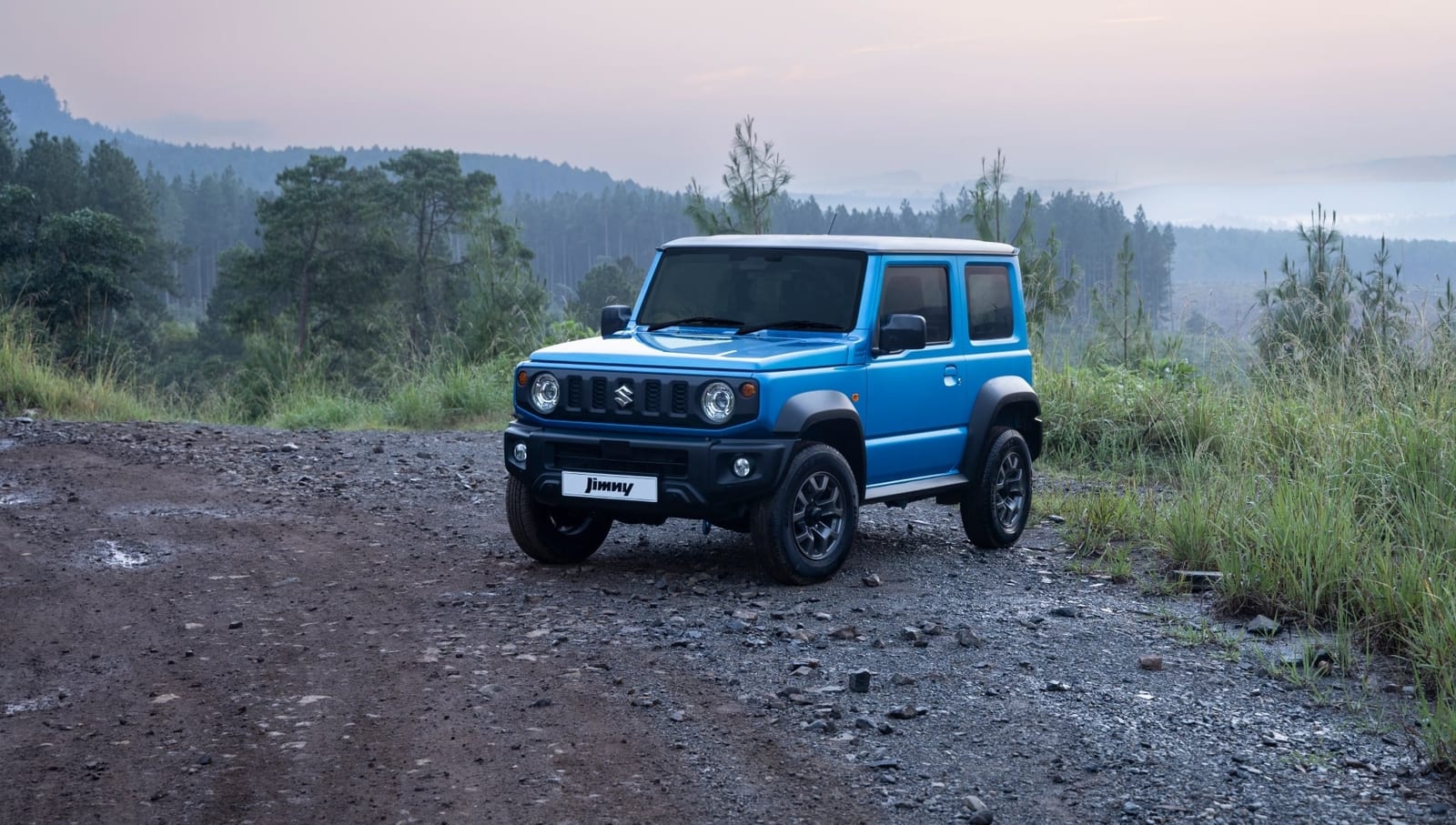
Before you spend a rand, look at the factory numbers. These are Suzuki Auto South Africa’s own figures.
| Figure | 3-door | 5-door |
|---|---|---|
| Ground clearance | 210 mm | 210 mm |
| Approach angle (how steep a slope the nose can meet) | 36 degrees | 36 degrees |
| Breakover angle (how sharp a crest the middle can cross) | 27 degrees | 24 degrees |
| Departure angle (the same, for the tail) | 47 degrees | 47 degrees |
| Kerb weight (the car with nothing in it) | 1,095 kg manual, 1,110 kg auto | 1,185 to 1,215 kg |
Those are strong numbers. The nose and the tail are short, so they seldom hit first. The Jimny is already a proper 4x4 without any extra steel.
The weak spot is the middle. The 5-door scrapes its belly sooner on a sharp crest. That is down to the 5-door’s longer wheelbase, the gap between the front and back wheels.
So be honest about your driving. A heavy bumper does not make a daily driver more capable. It just makes it heavier.
Underbody guards: what locals fit first
Crawl under a Jimny and three things hang low. Each has its own guard.
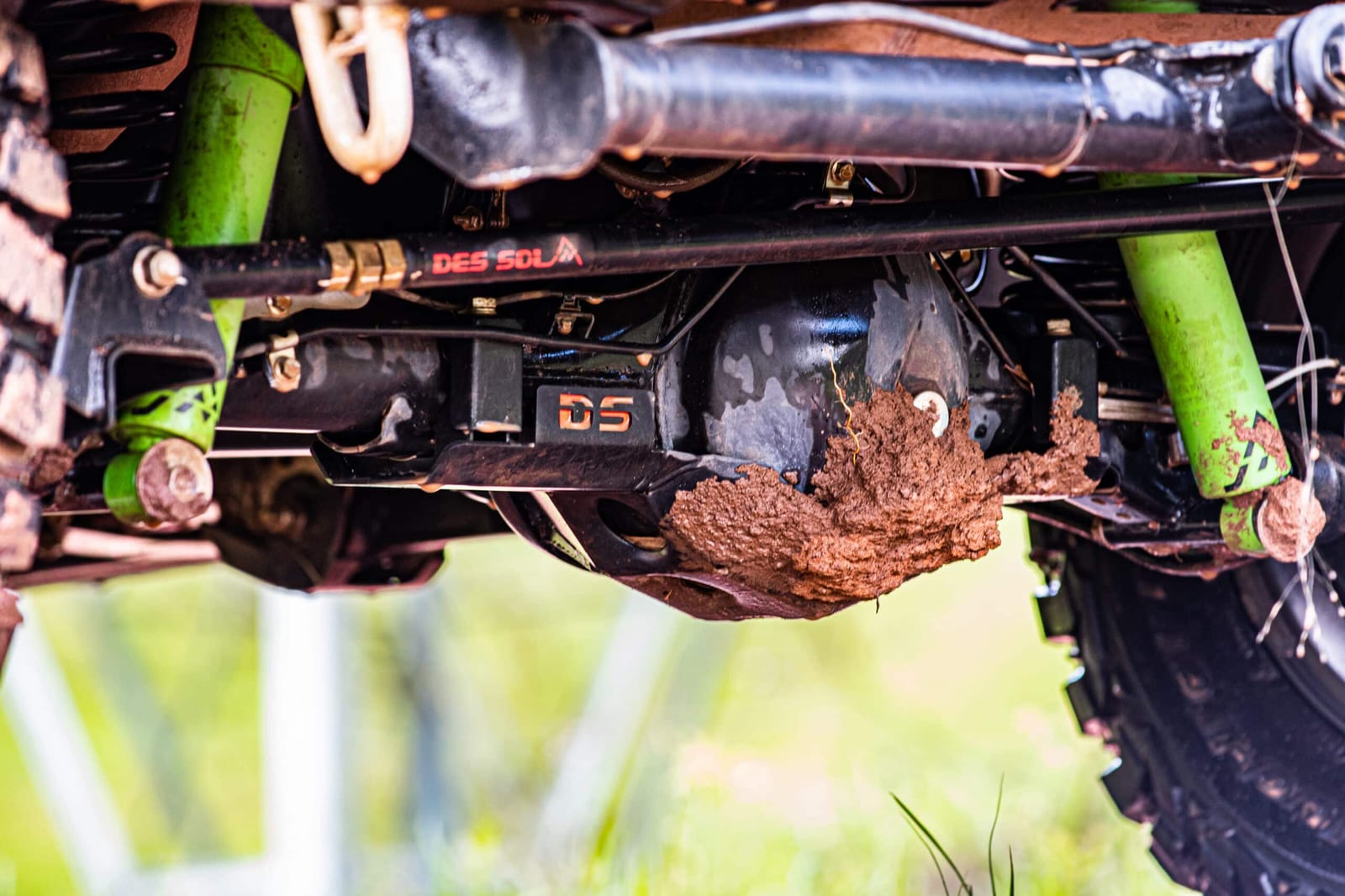
- Radial cup protectors. The suspension arms bolt to the chassis in round, cup-shaped mounts. These are small steel caps over those mounts. Des Sol, a Pinetown maker, makes them from 3 mm high-strength steel.
- Transfer case guard. The transfer case is the box that sends drive to the front wheels. Des Sol calls it one of the car’s most exposed drivetrain parts. A flat plate goes under it.
- Diff guards. The diffs are the round housings in the middle of each axle. They are the lowest parts under a Jimny. A shaped plate wraps around each one, front and back.
The order matters. SA owners on the forums, and a Cape Town maker, give the same advice. Do the cups and the transfer case first. Those repairs cost the most and stop you driving. Do the diffs last, because a diff plate hangs a little lower and costs you some ground clearance.
Suzuki agrees with the idea. Suzuki Auto SA’s own accessory guide names radial cup protectors and diff guards, and says: “We encourage the use of these kinds of additions.” It means for owners heading off-road. Suzuki also sells its own aluminium diff guards for the 5-door.
One tip from the forums. After any plate goes on, look underneath. Years ago an SA maker had to redesign a transfer case guard within a week. It was sitting on the case itself on two customers’ cars. Check yours.
| Guard (current Jimny unless noted) | Where | Price |
|---|---|---|
| Radius arm cups (no brand named) | JimnyworX | R2,050 |
| Des Sol radial cup protectors | Des Sol, JimnyworX, Wild Access | R3,200 |
| Des Sol front diff guard | Des Sol, JimSA, Wild Access | R4,200 |
| Des Sol rear diff guard | Des Sol, JimSA, Wild Access | R4,200 |
| Bash plate (no brand named) | JimnyworX | R4,999 |
| Des Sol transfer case guard | Des Sol, JimSA, Wild Access | R5,500 |
| Des Sol combo: both diffs and the transfer case | Des Sol, JimnyworX | R10,800 |
| Older Jimny: transfer case plate (Zombie’s own) | Zombie Offroad | R2,495 |
Bought one by one, the three Des Sol guards come to R13,900. The combo saves you R3,100. Fitting at Des Sol’s own factory costs extra, and for the combo it is R2,550.
Live prices · 4 October 2026
Underbody guards in stock right now
18 in stock at 5 stores today, from R2 050 to R10 800. Typical price about R4 200.
Rock sliders: what they save
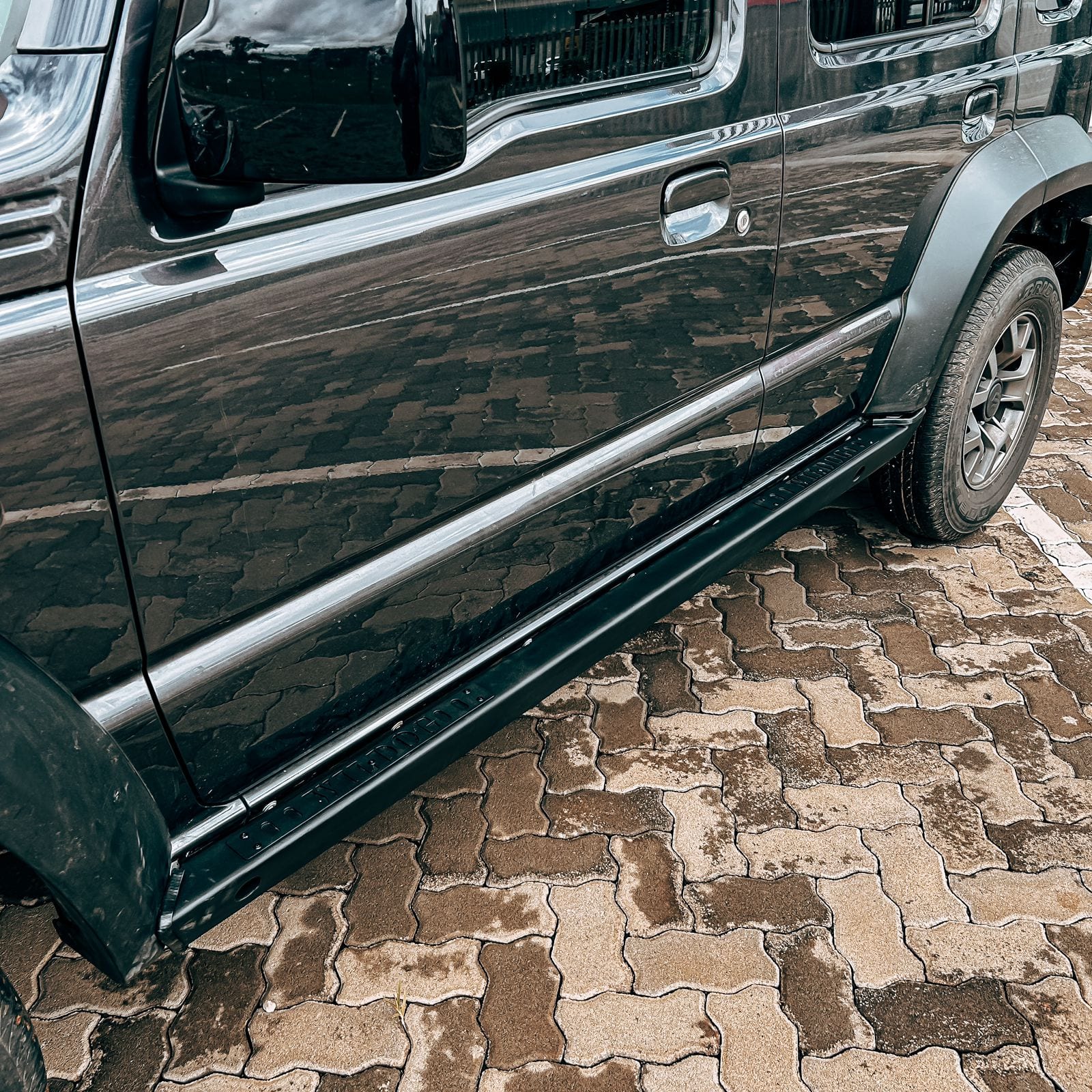
A rock slider is a steel rail. It bolts to the chassis under the doors and runs between the wheels. When the car drops onto a rock, the slider takes the hit before the sill does.
The Jimny needs this more than most cars. Its sills are plastic. SA owners say they break easily and cost a lot to replace. Des Sol goes further: it says a Jimny sill can come off if you step on it by accident. That is the maker’s word, not a test result.
The most common SA reason is not rock at all. It is gravel. The front tyres throw stones at the sills and the back wheel arches, all day long. One owner said his arches were badly pitted before he fitted sliders, and clean after.
Most sliders also make a good step. That helps when you need to reach a roof rack on a lifted car. Some double as jacking points. If you are loading the roof, remember it takes about 30 kg on the roof, rack included. Our guide to Jimny roof racks covers that.
And for balance, one dry forum owner said the only job his sliders do is give him a place to knock the grass off his boots. If you never leave the tar, he has a point.
What to ask before you buy
Every Jimny slider sold at the six stores we compare is bolt-on. None is welded to the chassis. SA makers all pitch “no drilling or welding”. Des Sol’s buyer’s guide gives a useful list of checks. Ask your fitter these:
- Does it bolt to the chassis itself, not to the bolts that hold the body on?
- Does it go on without drilling through the sill?
- Does it sit flush with the chassis, so you keep your ground clearance?
- Does it have drain holes, so mud does not sit inside and rust it?
- Is it made for your body? A 3-door set does not fit a 5-door.
Side steps are not sliders. JimnyworX sells flat steel side steps for the 5-door. They are for getting in and out, not for rocks.
| Slider | Fits | Where | Price |
|---|---|---|---|
| Des Sol (on sale) | Current Jimny | Zombie Offroad | from about R8,500 |
| Wildog (made to order, about 15 working days) | Current Jimny | JimSA | R8,500 |
| Des Sol | Current 3-door | Des Sol, JimSA, JimnyworX | R8,999 |
| Wildog | 3-door / 5-door | JimnyworX | R9,350 / R9,700 |
| Des Sol | Current 5-door | Des Sol, JimSA, JimnyworX | R10,999 |
| Rock Rage, no outer pipe | 3-door / 5-door | JimnyworX, Rock Rage | R10,850 / R11,900 |
| Rock Rage, with outer pipe | 3-door / 5-door | JimnyworX, Rock Rage | R12,800 / R13,750 |
| Des Sol | Older Jimny | Des Sol, JimSA, JimnyworX | R8,999 |
The longer 5-door set always costs more. Only one maker publishes a real weight. A Des Sol 3-door slider weighs 13 kg, so a pair is 26 kg. The others do not say. Des Sol fits sliders at its factory for R850.
Live prices · 4 October 2026
Rock sliders in stock right now
15 in stock at 5 stores today, from R8 499 to R13 750. Typical price about R9 700.
Front: nudge bar, bumper or bull bar
Locals mix these words up all the time. Here is what each one is.
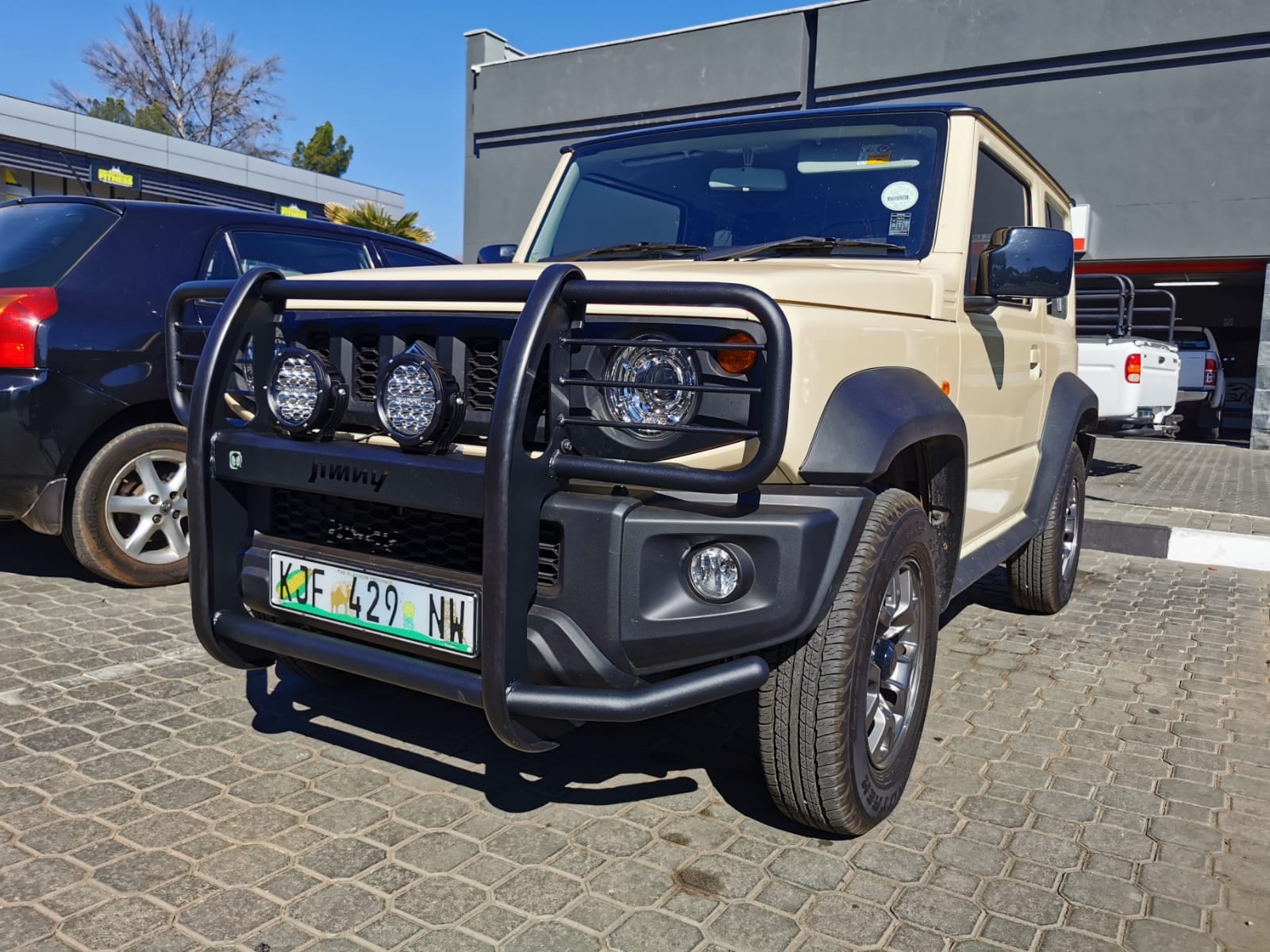
- Nudge bar: a light steel tube that sits over or under the plastic factory bumper. Mostly a look.
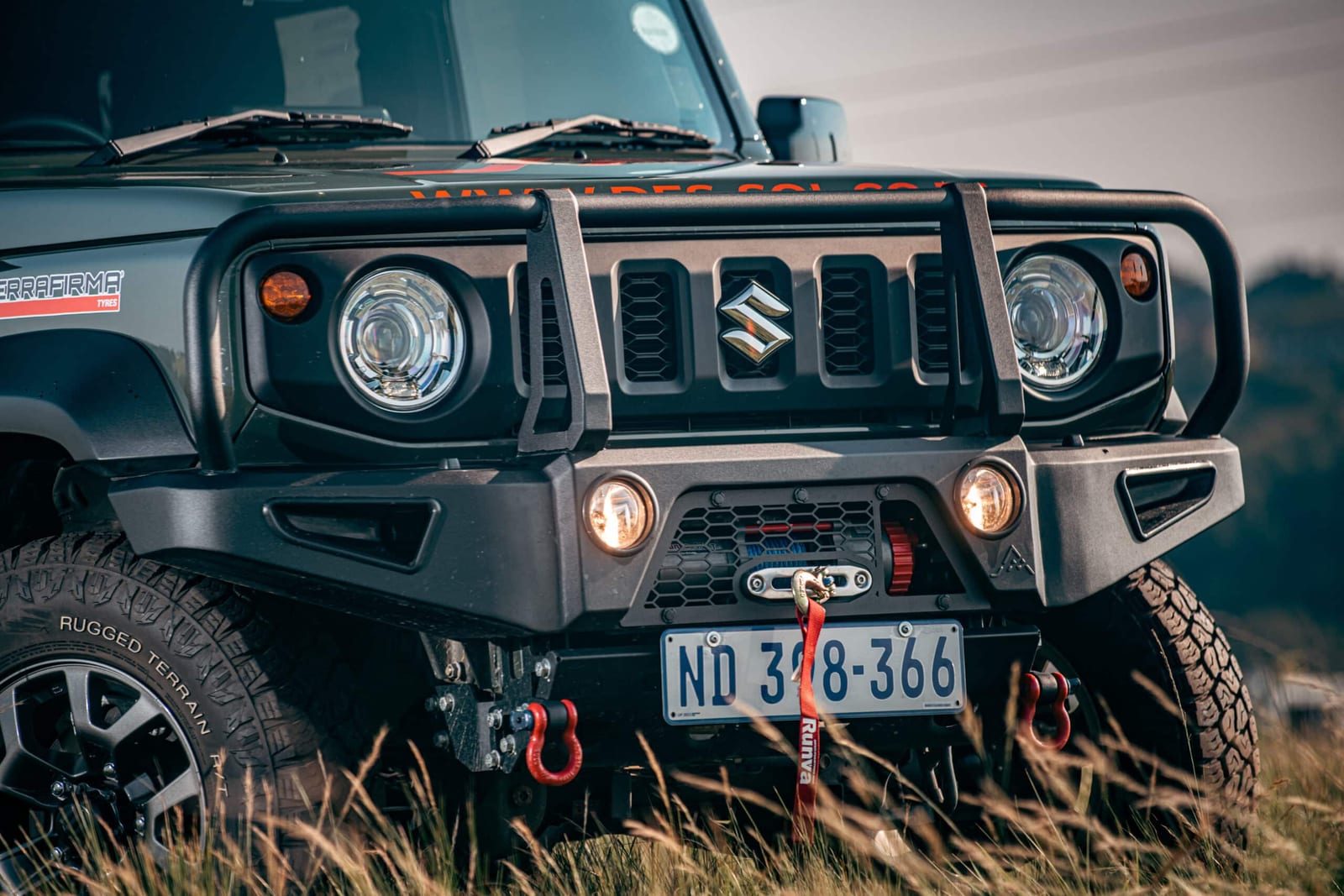
- Replacement bumper: the plastic bumper comes off, and a steel one goes on in its place. This is what most SA makers build.
- Bull bar, or bush bar: a full steel frame with hoops over the lights. It usually goes on over the factory bumper.
Why a steel bumper earns its place
It makes room for bigger tyres. A 235/75 R15 tyre needs about a 50 mm lift. It also needs the front bumper trimmed or replaced. A steel bumper is the clean way to do the bumper work for 235s. Our Jimny tyre size guide covers what fits, and choosing the tyre itself is its own guide.
It gives you proper recovery points. These are the strong loops a strap or rope hooks onto when you get stuck. Des Sol says the factory loops are round bar and may bend under a hard pull. Its bumpers come with rated shackles. If you want to keep the plastic bumper, Des Sol sells front recovery points on their own for R3,500.
It can take a winch later. The Des Sol, Rock Rage and Roaming Horizons bumpers can take one without coming off. But winch-ready is not winch-fitted. The winch, rope and wiring cost extra, and they add weight.
It can help your approach angle. Des Sol says its slimline and hoop bumpers improve it over the factory bumper. It does not publish figures, so we don’t either.
The nudge bar question
Here is the old forum advice, and it still holds. A dealer-style nudge bar protects very little. It adds no recovery points. SA owners have long said: skip it and save for a real bumper. JimnyworX sells one listed as an original Suzuki nudge bar for R5,500. Buy it if you like the look. Just know that is what you are buying.
| Type | Product | Where | Price | Worth knowing |
|---|---|---|---|---|
| Nudge bar | Sold as original Suzuki | JimnyworX | R5,500 | No recovery points |
| Bush bar | Jimny bush bar (no brand named) | JimnyworX | R8,325 | Full frame over the factory bumper |
| Nudge bumper | Roaming Horizons, built by Rock Rage | Roaming Horizons, JimSA, Rock Rage | from R9,480 | Winch plate, two recovery points |
| Replacement | JimnyworX front bumper | JimnyworX | R16,999 | Winch cradle, jack points |
| Replacement | Des Sol slimline | Zombie (3-door) R16,000; Des Sol, JimSA, JimnyworX R18,999 | from R16,000 | 26 kg, recovery points and shackles, 3-door and 5-door |
| Replacement | Rock Rage front bumper | JimnyworX, Rock Rage | R18,500 | Small winch, 3-year rust warranty, some drilling |
| Replacement | Wildog steel front bar | Zombie, JimSA, JimnyworX | R20,263 to R26,600 by version | One JimnyworX version has no recovery points |
| Hoop | Des Sol hoop bumper | Des Sol, JimSA, JimnyworX | R21,100 | 29 kg, recovery points and shackles |
| Full pipe | Rock Rage Expedition | JimnyworX | R22,800 | Fitting and fog lights extra |
| Older Jimny | Des Sol winch bumper | Wild Access, Zombie, Des Sol, JimSA | R15,500 to R17,500 | 26 kg |
Des Sol will fit any of its bumpers at the factory for R2,550. Its grille guard (R3,999) only fits on its own slimline bumper.
Check before you buy (2026 cars). Since the March 2026 update, 3-doors with Suzuki’s DSBS II safety pack have four front parking sensors. DSBS II is a camera and laser sensor that can brake the car for you. A steel bumper made for 2018 to 2025 cars may have no place for those sensors. Ask the maker if the bumper suits a 2026 car. And keep anything tall off the front of a car with the camera system.
Live prices · 4 October 2026
Front bumpers and bars in stock right now
21 in stock at 6 stores today, from R8 325 to R26 600. Typical price about R18 999.
Rear bumpers, tow bars and the spare wheel
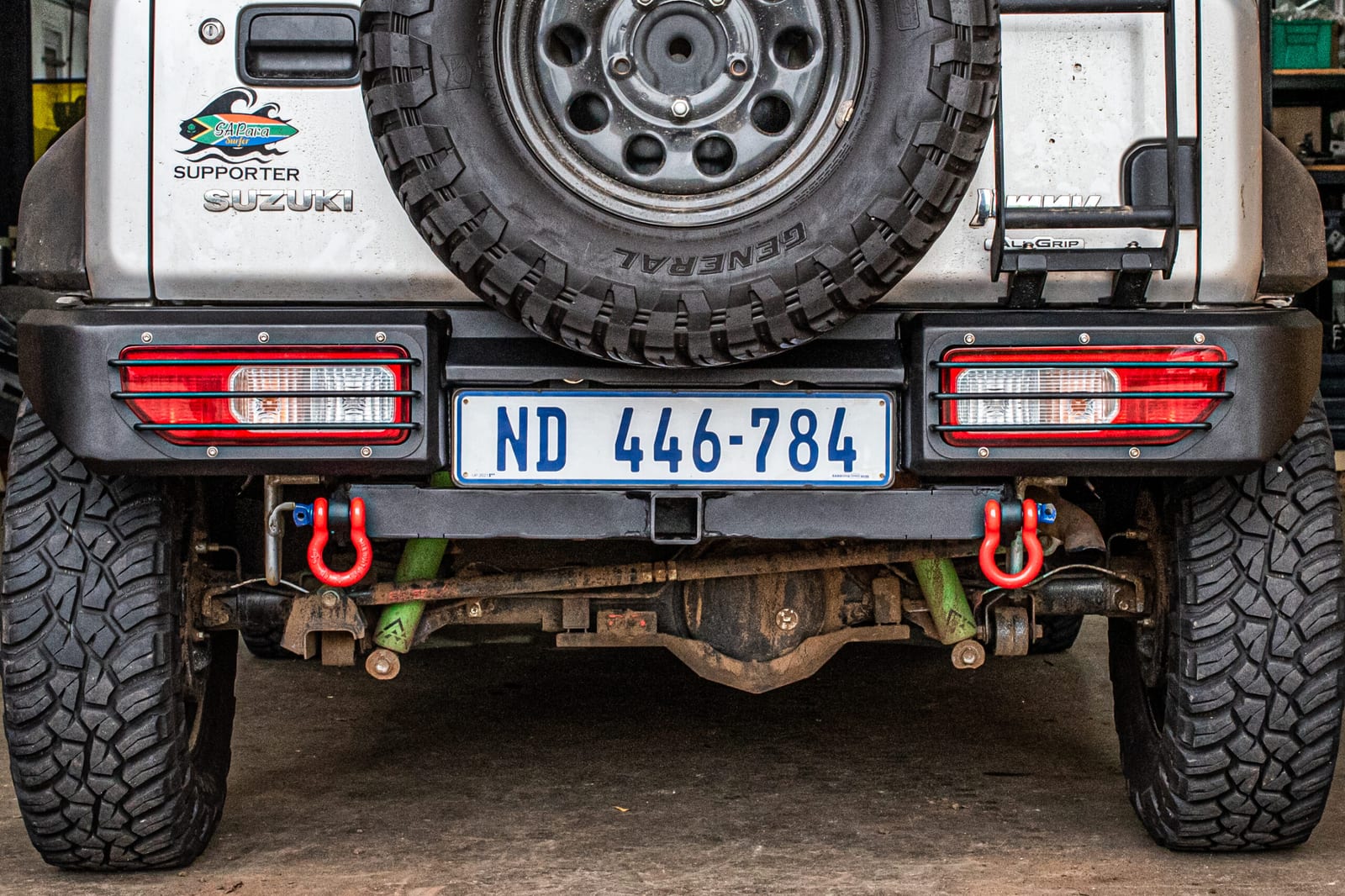
On a standard Jimny, the tow bar is a separate part hanging under the plastic bumper. A steel rear bumper can build the tow bar into itself. Des Sol says that clears the ground better than a tow bar hung low.
A rear bumper does not change what the car may tow. Des Sol says so on its own page. Suzuki SA rates the 3-door to tow 1,300 kg with a braked trailer. For the full picture, see what a Jimny may tow.
Keep your sensors and camera. Des Sol says its rear bumper keeps the factory parking sensors. It also keeps the 5-door’s reverse camera. For any other rear bumper, ask. The 2026 3-doors gained a reverse camera too, so check before you buy for a 2026 car.
Keep your lights. A steel rear bumper has to carry the rear lamps in a new home. The road rules say no fitting may cover a light (more on that below).
Watch the back door. Suzuki built the back door to carry the factory spare. SA owners who hung extra weight on it, like a jerry can holder or a bike rack, found the door flexed. The forum called it “a big no-no”. A bigger spare adds weight there too.
If you go to 235s, ask about a rear bumper with its own wheel carrier. Choice is thin. Of the six stores, only JimnyworX lists one: the GobiX rear bumper with a spare wheel carrier. Des Sol sells a roof mount for a spare (R1,900). But that puts a heavy wheel on a roof rated for about 30 kg, rack included. Read up on roof load first.
| Rear bumper | Where | Price | Worth knowing |
|---|---|---|---|
| Wildog steel rear bar with tow hitch | JimSA | R13,500 | Sold out on 23 September 2026 |
| Wildog rear bumper | JimnyworX | R14,850 | Tow ball and wiring extra |
| Rock Rage rear bumper with tow bar | JimnyworX | R16,200 | Wiring included |
| Des Sol rear bumper and tow bar | Zombie R16,495; Des Sol, JimSA, JimnyworX R16,999 | from R16,495 | Under 26 kg, wiring, shackles, keeps sensors |
Des Sol also sells front and rear as a pair, which saves a little.
| Front and rear pair | Where | Price |
|---|---|---|
| Des Sol slimline front and rear | Zombie Offroad | R31,995 |
| Des Sol slimline front and rear | Des Sol | R33,500 |
| Des Sol hoop front and rear | Des Sol, JimnyworX | R34,995 |
| Slimline and rear bought one by one | Des Sol | R35,998 |
Airbags, road rules, warranty and insurance
Here is only what we could check.
Airbags and people on foot. Suzuki’s 5-door brochure says the front bumper, fenders and bonnet are designed to absorb a knock. The point is to soften head and leg injuries to a person on foot. A rigid steel bar in front of that is not designed that way. SA 4x4 magazine’s bull bar guide makes the same point in general. It says rigid bars can upset airbag timing and hurt pedestrian safety. Nobody has tested a Jimny bumper and its airbags in South Africa. So no product in this guide is airbag-tested for SA. Labels like “airbag compatible” or “ADR certified” are Australian marketing. They carry no weight here. If your Jimny is a daily driver in town, a big steel bar is a trade-off, not a free upgrade.
Road rules. SA law says very little about bull bars directly. The trouble comes from what they cover. The road traffic regulations say no fitting may cover a required light, even partly. They also say the number plate must stay clearly visible. That is where light bars, spotlight brackets, hoops and rear bumpers catch people. Check your lights and plate after fitting.
Warranty. Suzuki SA says bad fitment or unauthorised changes “can void parts of your vehicle’s warranty”. It can only guarantee work done at an authorised dealer. Genuine Suzuki accessories fitted later get a one-year warranty with no limit on kilometres. The plain advice: use a fitter who will stand behind the work, and keep the invoice. Several of Des Sol’s fitment centres are Suzuki dealers, which helps.
Insurance. Pineapple, one SA insurer, lists tow bars, bull bars and side steps as accessories. It says accessories you don’t declare can leave you underinsured. Other insurers may differ. Either way, tell your insurer and keep the receipt.
Weight: the sum nobody does
Steel is heavy, and every kilo comes out of your payload. Payload is what the car may carry on top of its own weight. That includes you, your passengers and your luggage.
Suzuki SA only gives the figures to work this out for the 5-door. Its gross vehicle weight is 1,545 kg. That is the most it may weigh fully loaded. Take away its kerb weight and it can carry about 330 to 360 kg. Suzuki SA does not publish the 3-door’s gross weight. If you own one, read it off your licence disc or the plate with the VIN on it.
Here is what the steel weighs, using the only maker that publishes real weights:
| Part | Weight |
|---|---|
| Des Sol 3-door sliders (pair) | 26 kg |
| Des Sol slimline front bumper | 26 kg |
| Des Sol hoop front bumper | 29 kg |
| Des Sol rear bumper and tow bar | under 26 kg |
| Sliders, slimline and rear together | about 78 kg |
On a 5-door, the front and rear bumpers alone weigh about 52 kg. That is a big bite out of 330 to 360 kg, before two adults get in.
Weight at the nose matters most. A steel bumper sits ahead of the front wheels on a light car. So owners often fit stronger springs at the same time. Budget for that if you go the full steel route.
Who should buy what
| How you drive | What to fit | Rough spend, before fitting |
|---|---|---|
| Tar and good gravel (most owners) | Nothing. A nudge bar only if you like the look | R0 to R5,500 |
| Gravel passes and farm tracks | Radial cup protectors, then diff guards | R3,200 to R10,800 |
| Rocky trails, Sani-style climbs, club days | Sliders plus the underbody combo | about R19,300 to R21,800 |
| Going to 235 tyres, adding a winch | Steel front bumper with recovery points | from R16,000 |
| Towing a trailer off-road | Rear bumper with a built-in tow bar | from R13,500 |
| Full build | Front and rear pair, sliders, underbody combo | from about R51,300 |
One last number to keep in mind. On live listings we analyse daily, modified current Jimnys ask only about R10,000 more than stock ones. That is on thin data, and it is nowhere near what the parts cost. So buy protection for the driving you do, not for the sale. Our guide to what mods do at resale has more.
Where to buy and fit
Protection is where South Africa really builds its own, and builds it well. Local is lekker here.
- Des Sol is in Westmead, Pinetown. It makes most of its range in-house, with its own CNC machines and robot welders.
- Wildog is a Gauteng maker with fitment centres from Alberton to Cape Town.
- Rock Rage builds in Silverton, Pretoria, and also makes the Roaming Horizons bumper.
- Zombie Offroad in Cape Town makes its own plates for the older Jimny.
The same Des Sol part costs about the same at every store. Zombie is sometimes about R500 cheaper. Shop around, but the gap is small.
Fitting is extra unless the store says otherwise. At Des Sol’s factory it costs R850 for sliders. The underbody combo and any bumper cost R2,550 each. Des Sol also lists fitment centres in most regions. They include JimnyworX in Brackenfell, All Off-Road in Centurion, Venture 4x4 in Nelspruit, Epic 4WD in Mossel Bay and several Suzuki dealers.
No SA magazine has tested any Jimny slider or bumper. So judge on fit, on after-sales, and on what owners near you say. For everything else you can bolt on, see our guide to every Jimny accessory.
The bottom line
Most Jimnys need nothing. If you do leave the tar, a few thousand rand of steel under the car guards the parts that end trips. Sliders are for rock, and for gravel rash on the sills. A steel front bumper is for 235s, recovery and a winch, and it costs you payload. Buy the guard for the road you actually drive.
Today’s prices are always on our protection and sliders and bumpers and bull bars pages.
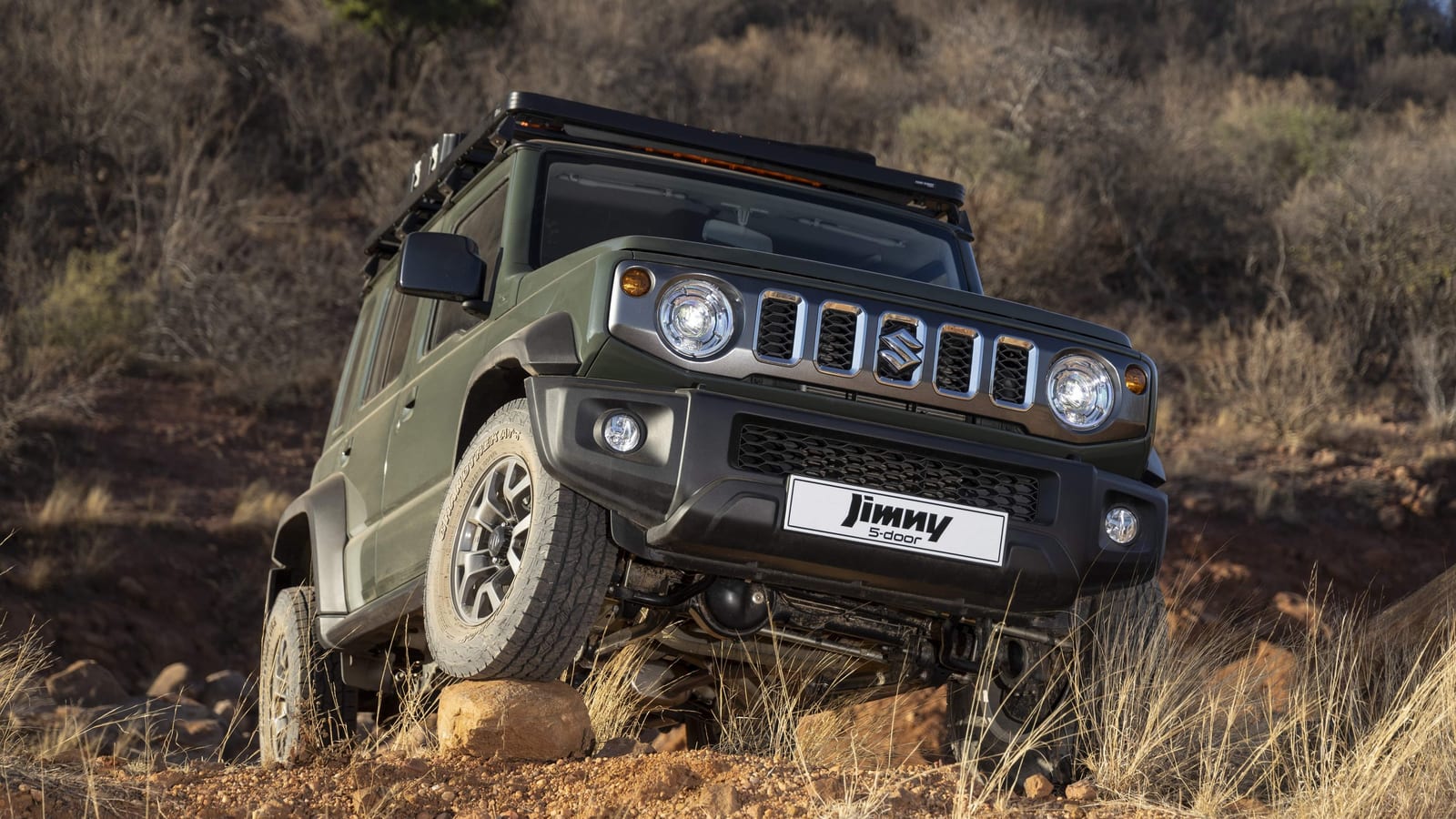
A big thank you to the people whose photos made this guide. The cover and the in-the-field shots are by Des Sol in Pinetown. The fitted-car photos are from JimnyworX SA in Brackenfell. The standard Jimny on gravel is from Suzuki Auto South Africa. Go and see what they build.