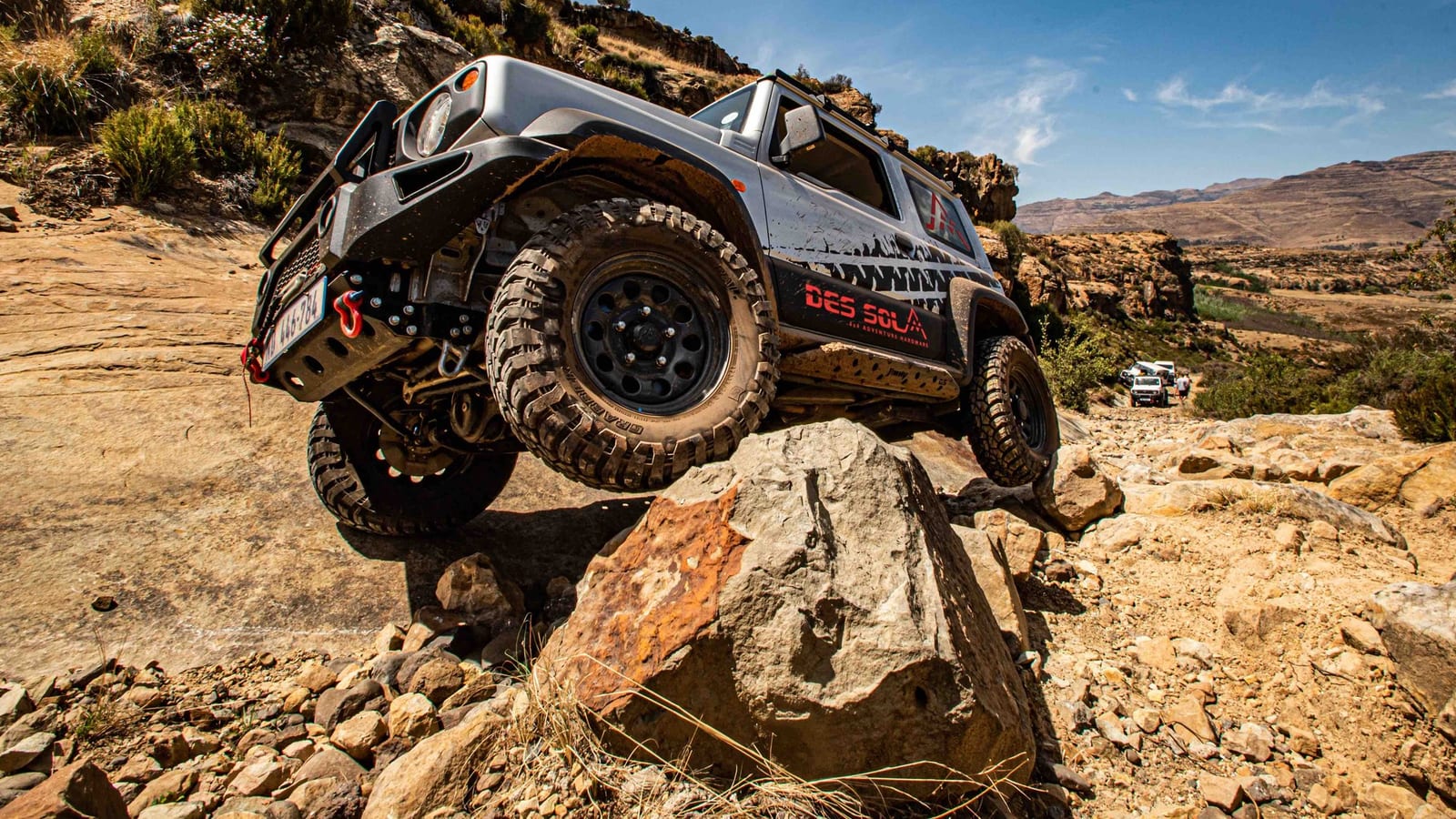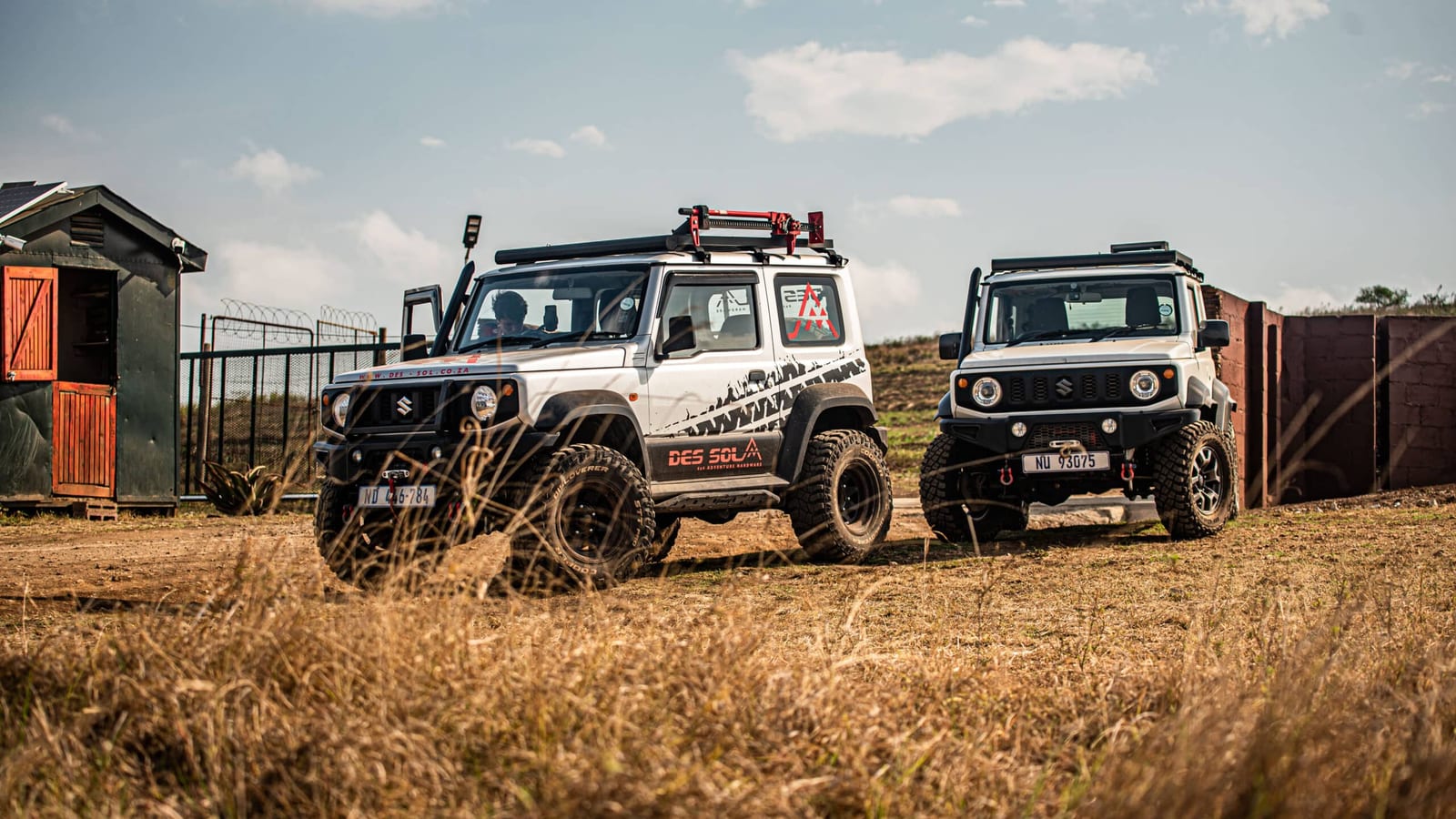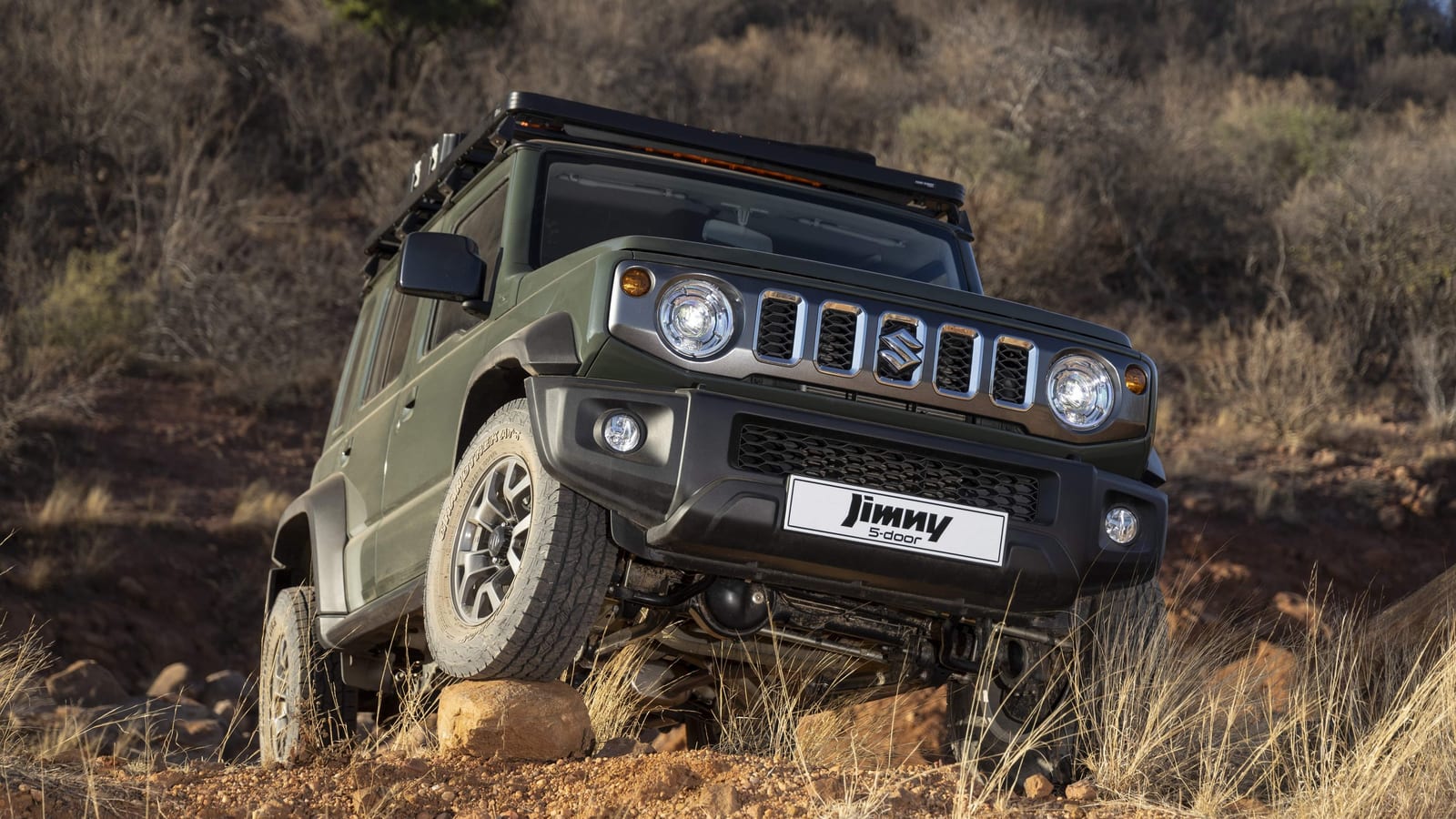
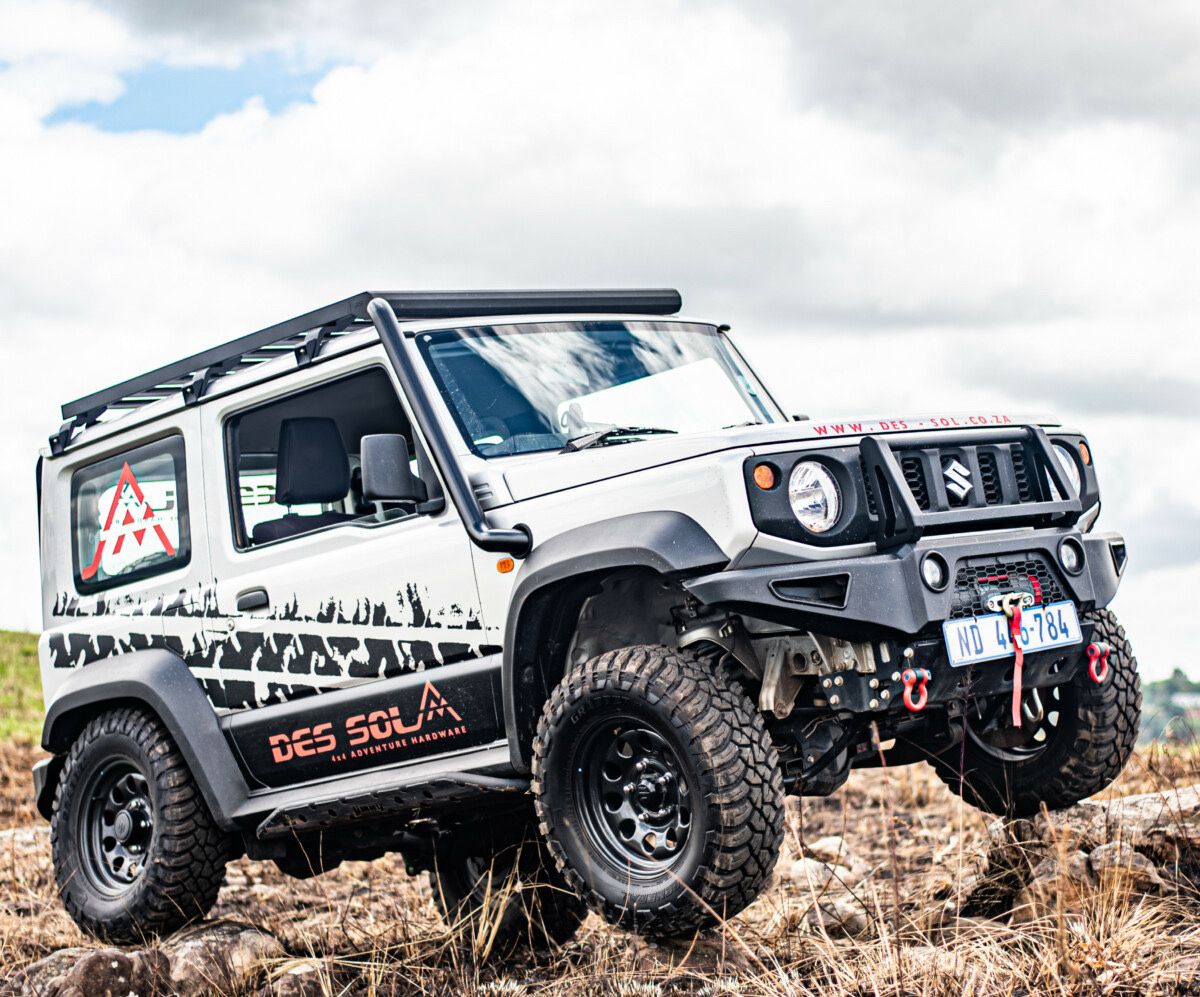
Cover photo: Des Sol, the Pinetown team who design and build their own Jimny parts. This is their own car. Go and have a look at their work.
Every current Jimny in South Africa leaves the factory on 195/80 R15 tyres. When they wear out, most owners want something bigger and chunkier. The question is how much bigger.
There are really only two answers. A 215/75 R15 is a tyre swap. A 235/75 R15 is a build.
This guide is about that choice. For the size maths, pressures and ratings, see our Jimny tyre size guide. For which brand to buy, see the best tyres guide.
The short answer
- Mostly tar, some gravel: you can stay on the factory size. It is the cheapest and lightest option.
- Gravel roads, touring, the odd trail: fit 215/75 R15 all-terrains on your factory wheels. No lift needed.
- Hard trails, and you will lift the car anyway: 235/75 R15, planned with a lift and a steel front bumper.
- 31 inch tyres: not a tyre you fit. A full build.
The sizes, in mm and in inches
Tyre shops in South Africa sell metric sizes. Here is what each one means in height.
| Size | Height | In inches | Bigger than stock | Extra room under the diffs |
|---|---|---|---|---|
| 195/80 R15 (factory) | 693 mm | 27.3 | 0 | 0 |
| 215/75 R15 | 704 mm | 27.7 | 1.5% | about 5 mm |
| 235/75 R15 | 734 mm | 28.9 | 5.8% | about 20 mm |
In width, a 195 is about 7.7 inches, a 215 about 8.5 and a 235 about 9.3. The 3-door and the 5-door run the same tyre on the same 5.5 inch wide wheel.
Look at the last column. A taller tyre lifts the axles and the diffs, the round lumps in the middle of each axle. But only by half of the extra height. It does not lift the body. A lift does that.
One experienced owner on 4x4community put it well. If your diffs are hitting rocks, no lift will help. Only a taller tyre raises them. That is the real off-road case for 235s.
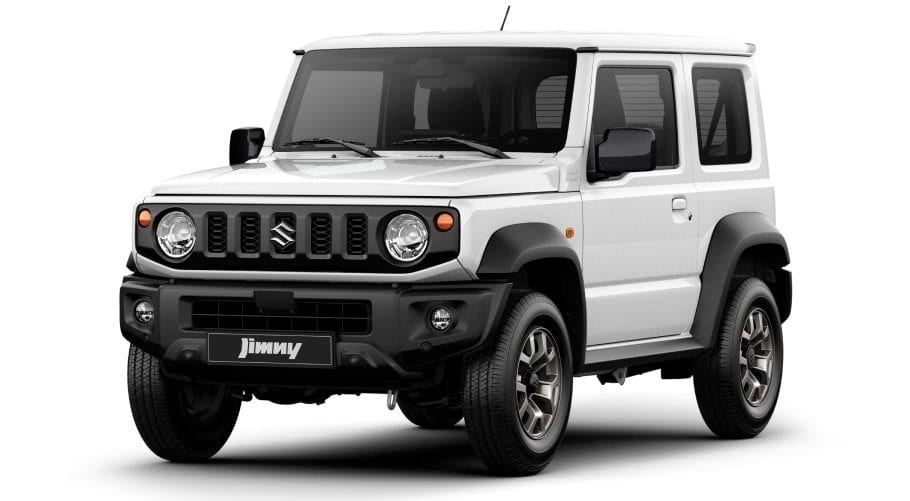
215/75 R15 on a Jimny: the easy step
The 215/75 R15 goes straight onto the factory wheels. You need no lift and no wheel spacers. For most owners nothing rubs. A Cape Town owner found the front tread touching the plastic bumper corner at full lock, mostly in reverse. Plenty of others have nothing touching at all.
The speedo barely moves, because the tyre is only 1.5% taller.
The real reason to go 215 is choice. Very few proper all-terrain tyres are made in the factory size. In 215/75 R15, Tiger Wheel & Tyre listed nine chunky 4x4 tyres online in September 2026. Every one of them can carry more weight than the factory tyre.
Owners also like how it looks, and some say the wider tyre feels steadier on the highway.
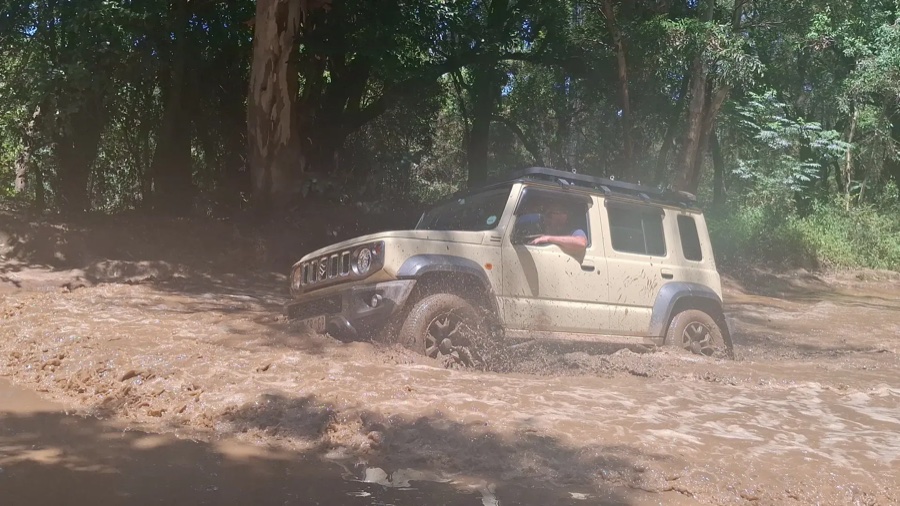
It also goes far. Suzuki Safari, a tour company, runs a near-standard current Jimny as a guide car. It has toured Southern and East Africa on 215/75 R15 all-terrains, with no lift and the factory bumper.
What it costs, per tyre, on 23 September 2026:
| Where | Tyre | Price per tyre |
|---|---|---|
| JimnyworX, Cape Town | General Grabber | R2,720 |
| Supa Quick | Falken Wildpeak A/T3WA | R2,786 |
| Tiger Wheel & Tyre | Hankook Dynapro AT2 Xtreme | R2,869 |
| Tiger Wheel & Tyre | BFGoodrich KO2 or KO3 | R5,639 |
Fitting is extra. Buy five tyres, not four. Every Jimny carries a full-size spare on the back door, so five Grabbers come to R13,600. Our best tyres guide compares the brands, and the all-terrain tyres guide explains all-terrain against highway and mud tyres.
One Durban owner on 215s did feel a small drop in power on long climbs. For mostly tar, he said he would pick a 205/75 R15 next time. That size is almost exactly the factory height. We could not find it at the big tyre chains in September 2026, so ask your tyre shop.
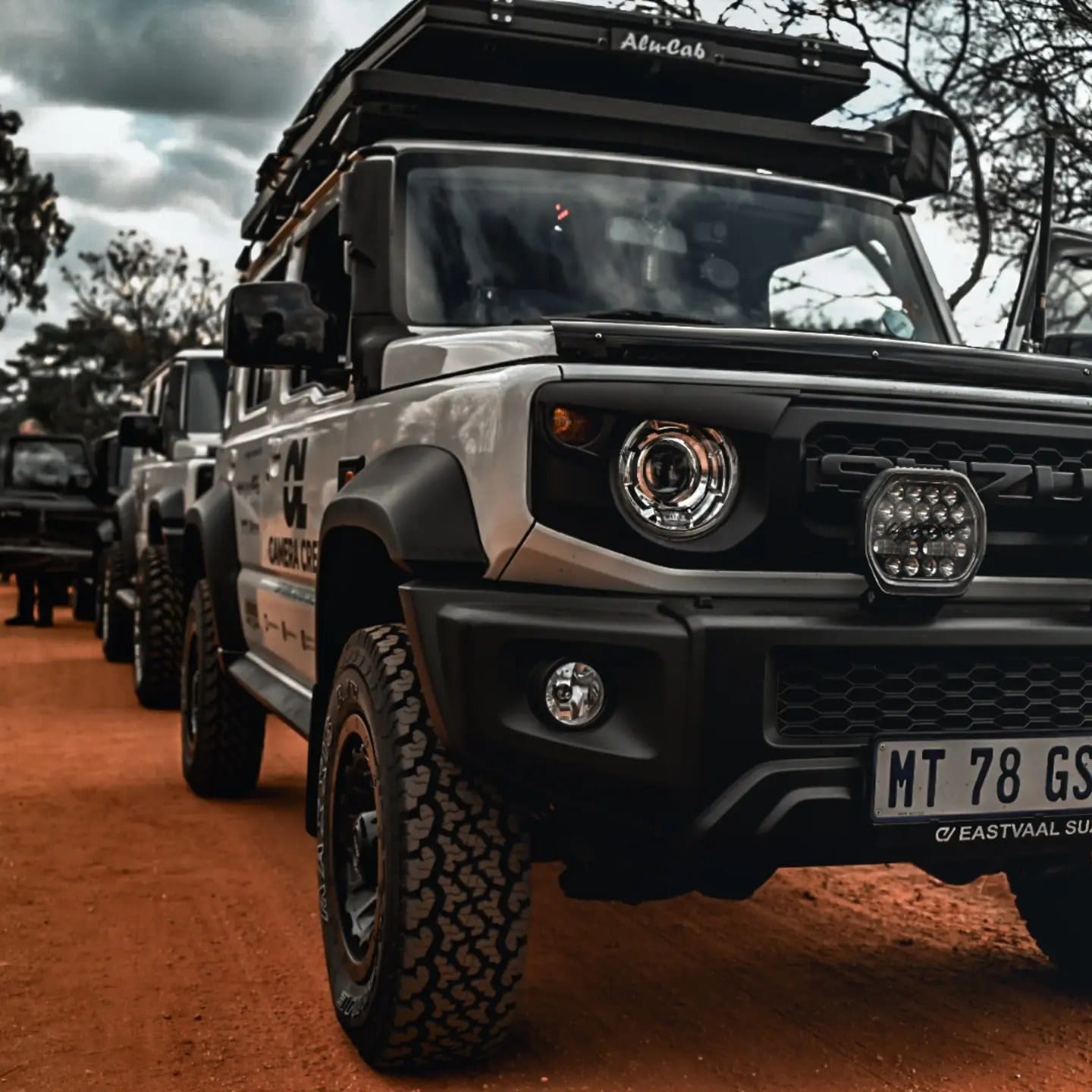
235/75 R15 on a Jimny: a build, not a tyre swap
A 235/75 R15 is about 28.9 inches tall. It gives about 20 mm more room under the diffs and a bigger footprint when you let the tyres down on sand. It also looks the part.
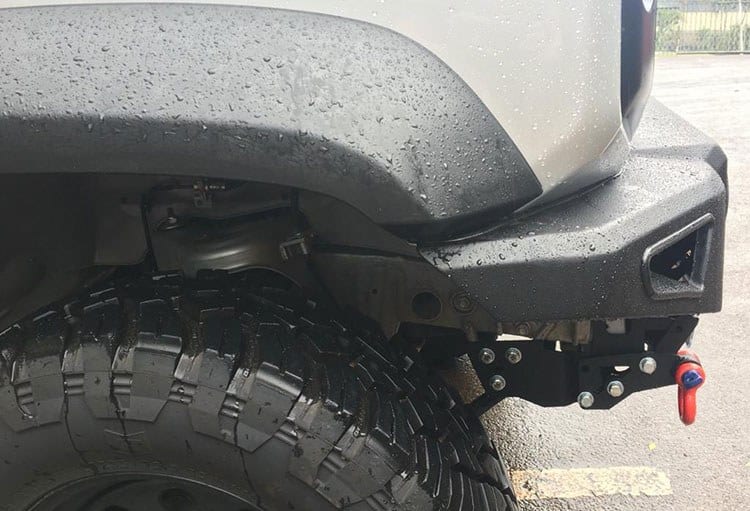
The tyre goes onto the factory wheel. The trouble comes when the wheels move. On a standard car, a 235 touches the bumper and the arch at two moments:
- Full lock: when the steering is turned all the way.
- Full flex: when one wheel is pushed right up into the arch on rough ground.
South Africa’s own Jimny makers do not quite agree on what that means. Des Sol’s tyre advice page, from 2020, calls 235/75 its suggested size for the current Jimny. It lists only a slight rub at full flex on the standard bumper, and a slight drop in power. Its newer pages tell a different story. Its longer front arms are made for lifts of 50 to 100 mm, and it pairs bigger tyres with an aftermarket front bumper.
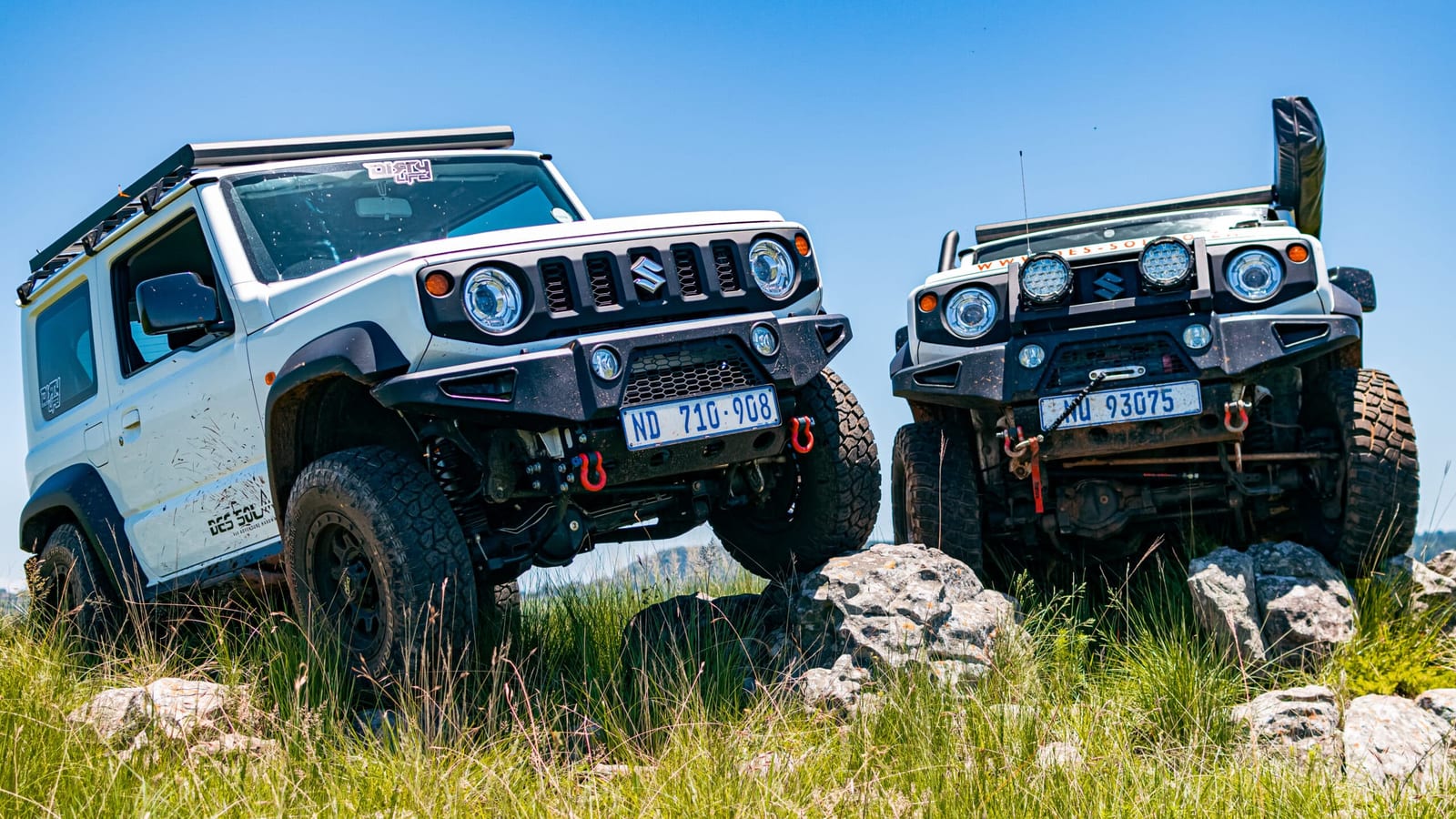
On the forums, every current Jimny owner we found on 235s also had a lift. So a lift is not a law of physics. But it is what nearly every South African 235 build has.
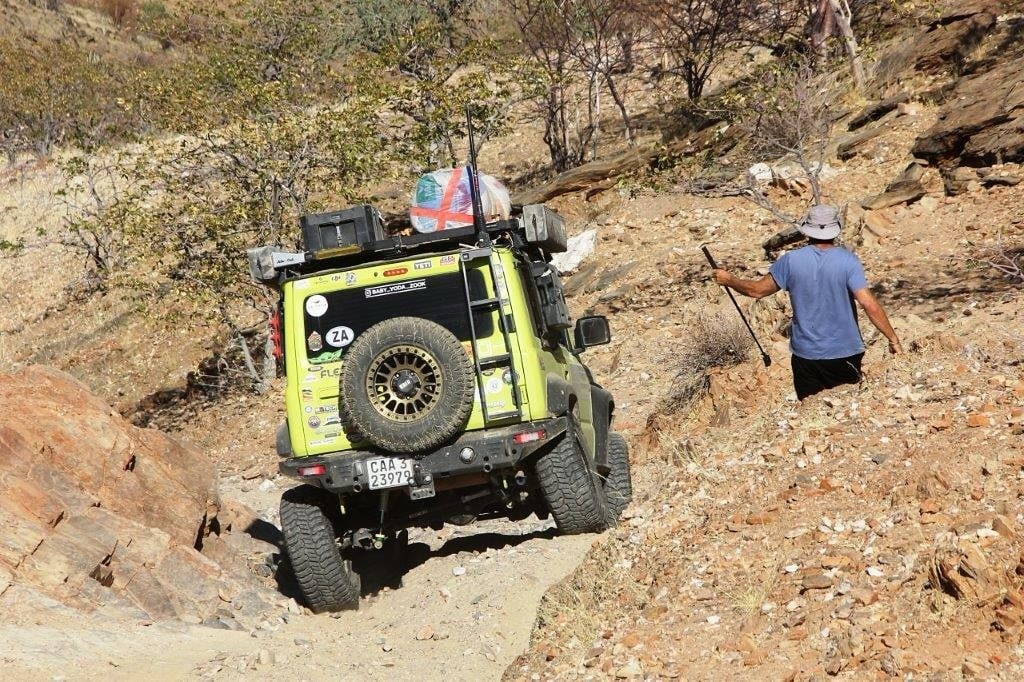
What a typical 235 build adds
| Part | Why | Price seen, 23 September 2026 |
|---|---|---|
| Five 235/75 R15 tyres | The tyres, spare included | R16,295 to R30,895 |
| Lift of about 50 mm, springs and shocks | Room for the tyre to move up into the arch | R17,995 (Ironman) to R32,999 (Des Sol Pack 3) |
| Castor bushes, if the kit lacks them | Put the front wheels back at the right steering angle after a lift | R3,099 to R3,250 |
| Longer front arms (optional) | A stronger castor fix that also moves the front wheel forward, for more tyre room | R6,999 a set (Des Sol) |
| Steel front bumper | The plastic corner is what the tyre hits | R9,480 to R26,600 |
| Alignment | Always needed after a lift | Ask your fitter |
Fitting is extra on most of these. The Des Sol arms are also sold at Wild Access for R2,750 a side, so check whether a price is for one arm or two.
A lean build, with Goodyear all-terrains, an Ironman kit and a Roaming Horizons bumper, comes to about R43,770 in parts. A Des Sol build, with Dunlop tyres, its Pack 2 kit and its Slimline bumper, comes to about R66,843. Our lift kits guide covers every kit and what is missing from the box.
Live prices · 4 October 2026
Front bumpers for the current Jimny, in stock now
21 in stock at 6 stores today, from R8 325 to R26 600. Typical price about R18 999.
Our rock sliders and bumpers guide covers the bumpers in more detail.
Check the wheel width
The factory wheel is 5.5 inches wide. Tyre makers generally approve a 215/75 R15 on wheels from 5.5 to 7 inches. So 215s sit happily on the factory wheel.
A 235/75 R15 is different. Many tyre makers list 6 inches as the narrowest wheel for it. Plenty of South African owners still run 235s on the factory wheel, and no law sets a wheel width. But ask your tyre shop what the maker approves for your exact tyre. This is one reason many 235 builds move to a 6.5 or 7 inch wheel.
If you do change wheels, keep them light and close to the factory offset. SA 4x4 magazine warns that wide steel wheels that stick far out strain the steering and wheel bearings. They can also bring on the shake known as death wobble.
235s, spacers and the tyre price
Wheel spacers are thick plates that push each wheel further out. They are not a way to make 235s fit. Des Sol, who make them, say their spacers add a rub on the arch at full flex with 235s. If you fit spacers, make sure the wheel nuts get their full grip on the studs, and check them again at every tyre rotation.
What surprises most people is that the tyre itself costs about the same in either size.
| Tyre, at Tiger Wheel & Tyre | 215/75 R15 | 235/75 R15 |
|---|---|---|
| Dunlop Grandtrek AT5 | R3,589 | R3,569 |
| General Grabber AT3 | R2,899 | R4,319 |
| BFGoodrich KO2 | R5,639 | R6,179 |
| BFGoodrich KM3 (mud tyre) | R5,989 | R6,149 |
Prices per tyre, VAT included, seen on 23 September 2026. The real cost of 235s is everything around the tyre.
Jimny 215 vs 235: the money side by side
| Route | What you buy | About, in parts |
|---|---|---|
| Stay on the factory size | Five new 195/80 R15 tyres | From R9,845 |
| 215/75 R15 | Five all-terrains, nothing else | R13,600 to R28,195 |
| 235/75 R15, lean build | Tyres, lift kit, steel bumper | About R43,770 |
| 235/75 R15, Des Sol build | Tyres, Pack 2 kit, Slimline bumper | About R66,843 |
So 215s are a tyre purchase. 235s are a R44,000 to R70,000 project. That money does buy real parts, like better springs and shocks and a stronger bumper. Just go in knowing it.
A long-time owner on 4x4community has run 235 mud tyres on his lifted current Jimny for over 100,000 km. He says they are brilliant off-road, poor on tar and slippery in the wet. And he still tells most people to buy 215 all-terrains.
What bigger tyres change on the road
The speedo. A taller tyre covers more ground in one turn, so the needle reads lower than before. On 215s you will not notice. On 235s the needle reads about 6% lower than it did on the factory tyres, and the odometer counts about 6% fewer km. Our tyre size guide has the full sums.
Pulling power. A 235 makes each gear about 6% taller. The engine turns slower at the same real speed, and the car pulls a little less on hills. The 5-door is heavier, so expect it to feel this a bit more.
Fuel. The owner above says his fuel went from about 12 km/l to about 8 km/l. But that was on heavy mud tyres, with a lift. Size alone did not do all of that.
Weight. Heavy tyres throw away the Jimny’s big advantage, which is its light weight. SA 4x4 magazine warns that heavy mud tyres make it sluggish and quicker to bog down in soft sand.
Speed rating. The factory tyre is rated to 180 km/h. Most 215 and 235 all-terrains match or beat that. The BFGoodrich KM3 mud tyre is rated to 160 km/h, so never drive faster than that on it.
Load. Every 215 and 235 all-terrain we checked can carry more than the factory tyre. Bigger tyres still do not let the car carry more. Suzuki sets that limit.
The spare. Upsize all five tyres. The factory spare cover is made for the standard size, so a bigger spare may need a new one. If you keep a 195 spare with 235s on the car, use it only to get home, in two-wheel drive.
The shake. A Jimny’s solid front axle can shake badly at around 60 to 80 km/h if something is out. Des Sol says it now sees faulty new tyres causing shakes and vibration over 100 km/h. So if the steering shakes after new tyres, check the tyres and the balancing first. Des Sol says a Jimny tyre should not need more than about 90 g of balance weight.
The alignment. One Durban owner’s tyre shop failed twice to align his car after 215s, and blamed the tyres. Another shop sorted it in 15 minutes. If a shop blames the tyres, go somewhere else.
Live prices · 4 October 2026
Spare wheel covers and mounts in stock now
13 in stock at 4 stores today, from R150 to R3 915. Typical price about R2 839.
What about 31 inch tyres?
A 31 inch tyre is about 787 mm tall. That is 13.6% taller than the factory tyre. It is not a tyre you can fit to a standard Jimny.
Some South African builds do run them. Des Sol sells longer front arms that it says help with 235 and 31 inch setups, as part of a lift of 50 to 100 mm. Those builds also have a new bumper and often new wheels. If someone sells you a Jimny on 31s, ask for the full list of what was done to make them fit.
Warranty, insurance and the law
Your Suzuki warranty
Suzuki Auto South Africa says lift kits and oversized tyres can change a Jimny’s handling, steering and balance. It also says third-party parts could put your warranty at risk if something goes wrong.
The Competition Commission’s rules help here. A carmaker may not cancel your whole warranty because you fitted other parts. It can refuse a claim that the part, or the fitting, caused. In practice, Des Sol says some customers were told to put the car back to stock before a dealer would look at a claim.
Tyres are wear items, and we found no case of bigger tyres alone causing a rejected claim. A lift is different, because it touches the axles and steering. If your Jimny is under warranty, ask the dealer in writing before a 235 build.
Insurance
Tell your insurer about bigger tyres, new wheels and any lift. Get the answer in writing and keep the invoices. An undeclared change can give the insurer grounds to cut or reject a claim.
The law
South African law sets no maximum tyre size. There is no rule about how big a tyre may be on a given wheel. The law cares about four things:
- The tyre must carry the load on it.
- You may not drive faster than its speed rating.
- It needs at least 1 mm of tread, and must not be worn to the wear bars.
- It may not have deep cuts or bulges.
Your speedo must also work. When you sell the car, it needs a roadworthy test. In the few owner reports we found, built 4x4s failed on lights, not on tyre size.
The older Jimny (1998 to 2018)
The older Jimny left the factory on 205/70 R15. A 215/75 R15 is 5.3% taller than that, and it is the size Des Sol recommends for the older car. It may catch the front bumper at full lock in reverse. Des Sol’s fix is to trim about 10 mm off the bumper insert.
A 235 on the older car is a much bigger ask. Des Sol lists it only with a modified bumper and wheel spacers, and warns of a large drop in power on the road. One owner found his older Jimny struggled to reach 120 km/h. On the older car, 215 is as far as most owners should go.
3-door or 5-door
Both bodies run the same tyre on the same wheel, so tyre sizes do not change. The lift kits do. Several makers sell separate 5-door kits with extra rear bump stops, so tell the shop which body you have. See our 3-door vs 5-door guide for the rest.
Who should run what
| You | Run | About, in parts |
|---|---|---|
| Tar-first, the odd dirt road | The factory size, or 215 all-terrains | R9,845 to R13,600 |
| Gravel roads, Kruger trips, the Cederberg, Sani | 215/75 R15 all-terrains | R13,600 to R28,195 |
| Loaded touring with a rooftop tent | 215s, and good shocks before anything bigger | Tyres, then shocks |
| Hard trails, diffs hitting rocks | 235/75 R15 with a lift and steel bumper | R44,000 to R70,000 |
| Older Jimny | 215/75 R15 | Tyres only |
Every wheel, spacer and spare cover we track is on our wheels and tyres page. Lifts are on the suspension and lift kits page, and bumpers on the bumpers page.
The bottom line
For most South African Jimnys, 215/75 R15 is the right amount of bigger. It goes on the factory wheels, gives you real all-terrain choice and barely changes how the car drives. A 235/75 R15 is for owners who hit their diffs on rocks and will lift the car anyway. Budget for the lift, the bumper and the alignment from day one. And skip the 31 inch talk unless you want a full build.
Shopping for a Jimny that has already been done? Browse Jimnys for sale in South Africa, or check what yours is worth before you spend.
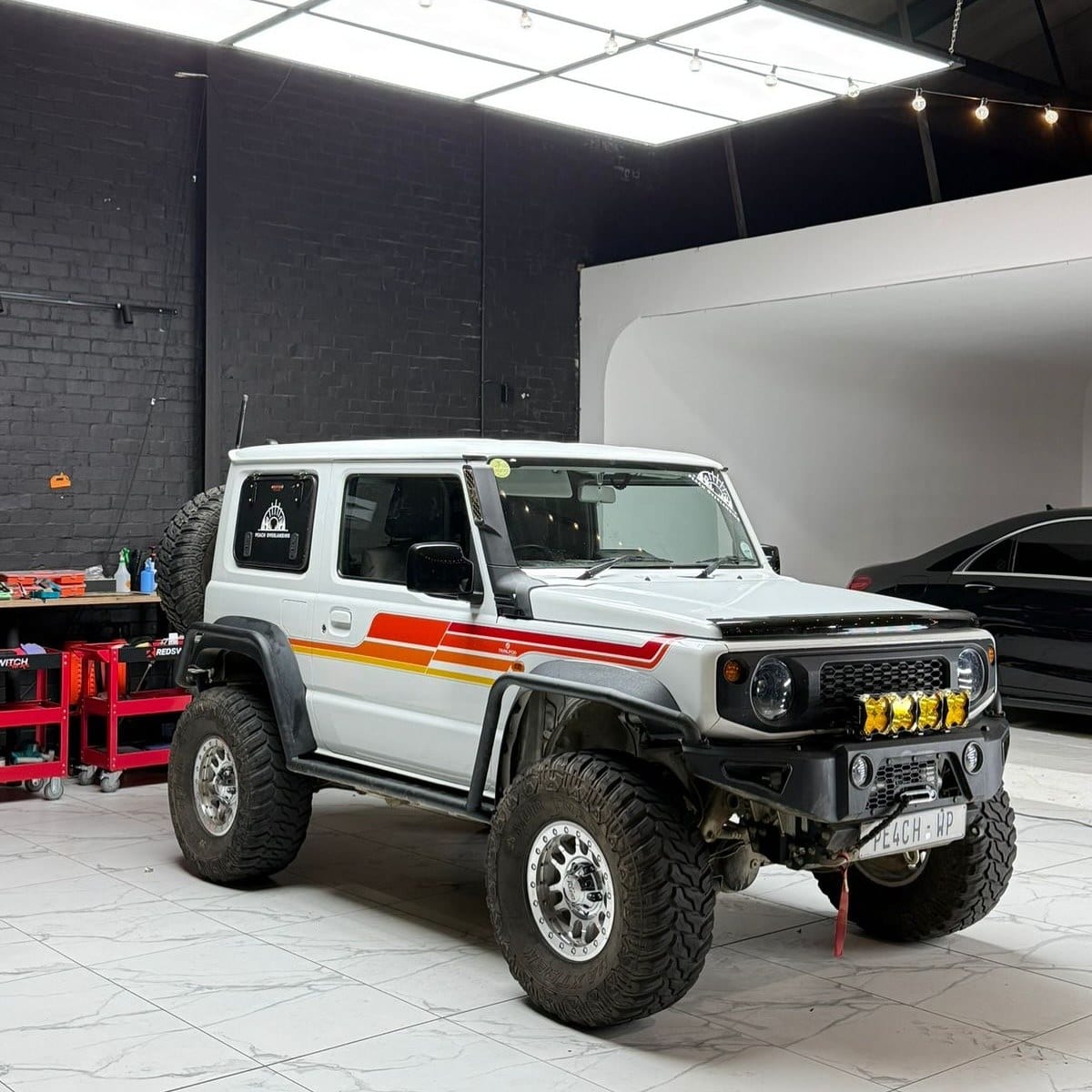
A big thank you to the people whose photos made this guide: Des Sol in Pinetown, Suzuki Auto South Africa, and the owners behind @dirt_road_diaries_ol, @peach_overlanding and @baby_yoda_zook. Go and follow their builds, and support the local shops that keep South Africa’s Jimnys on the road.