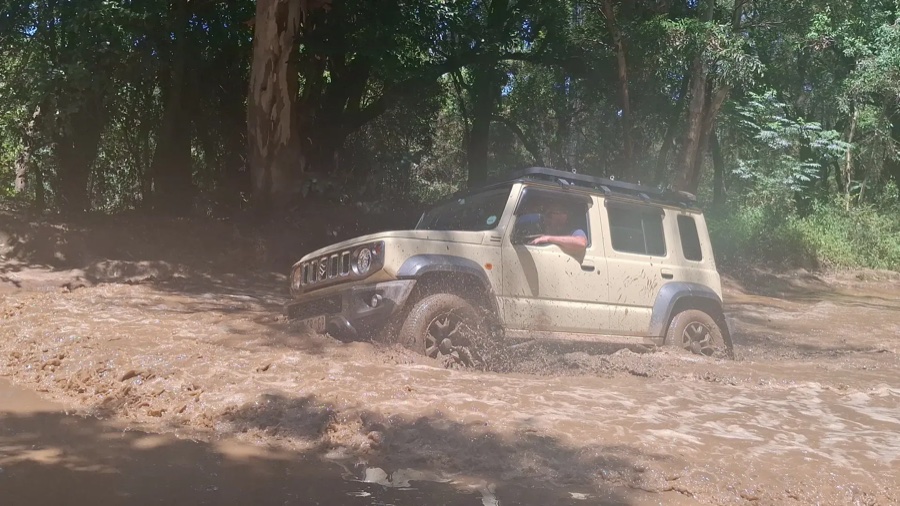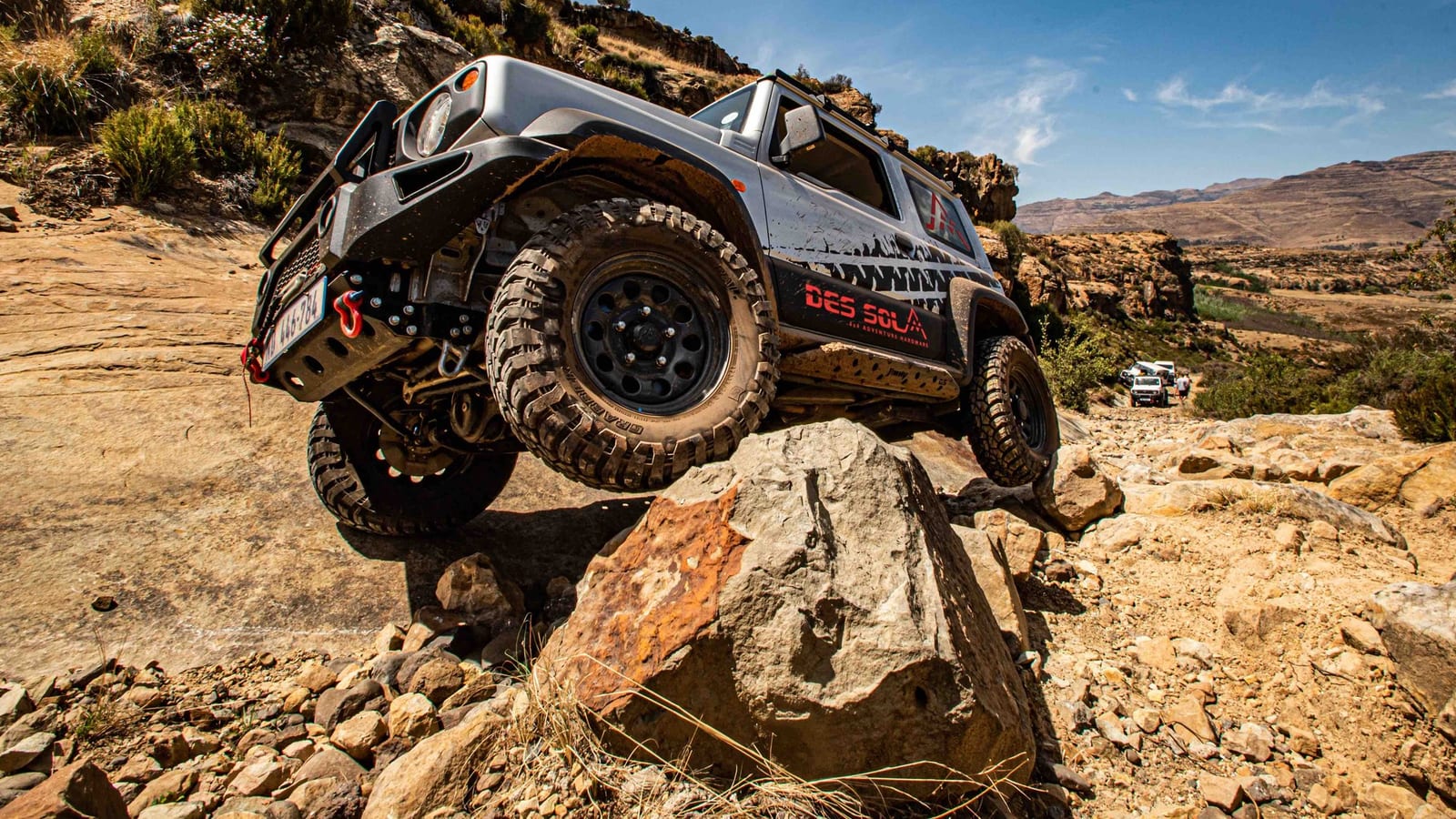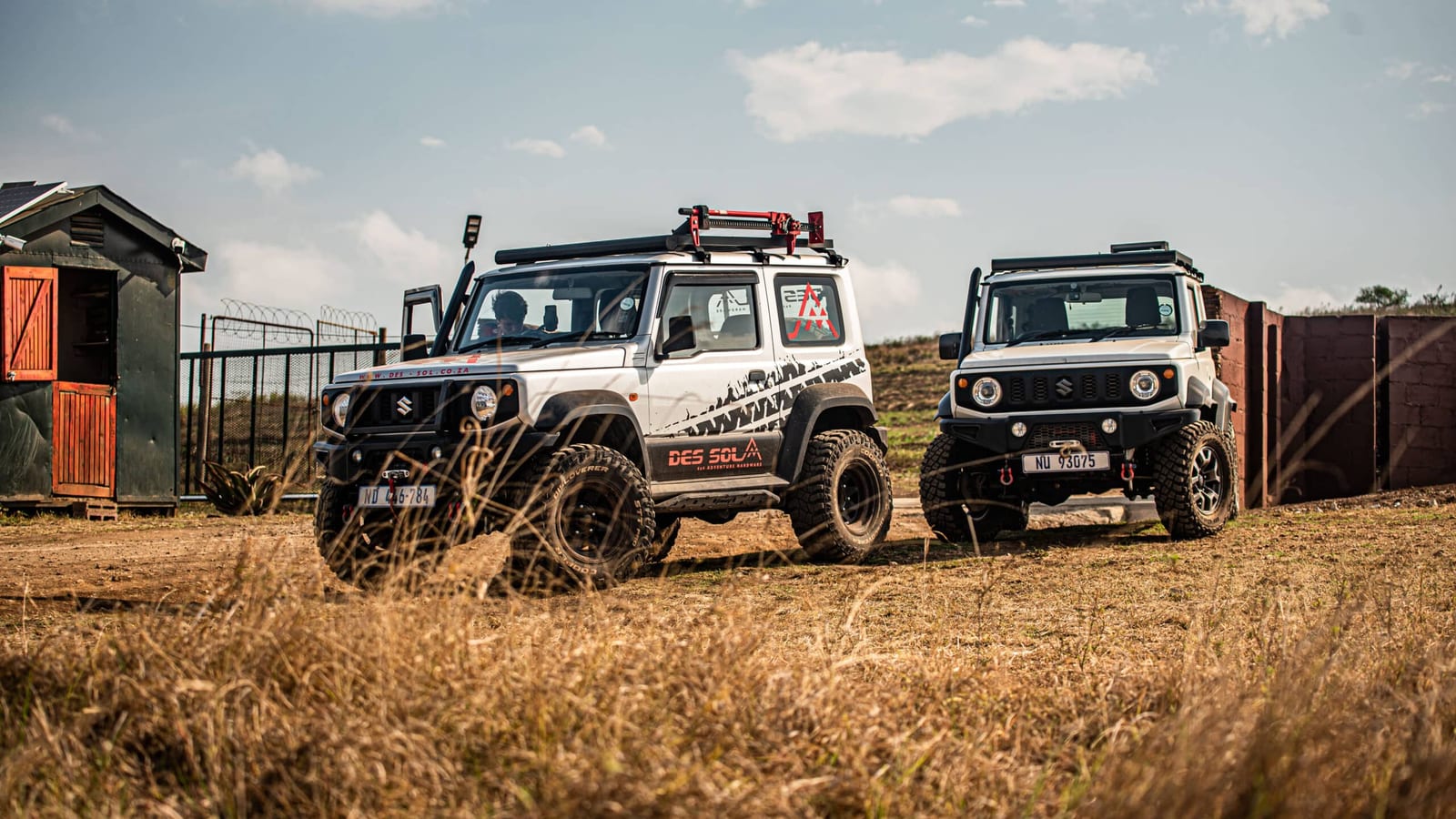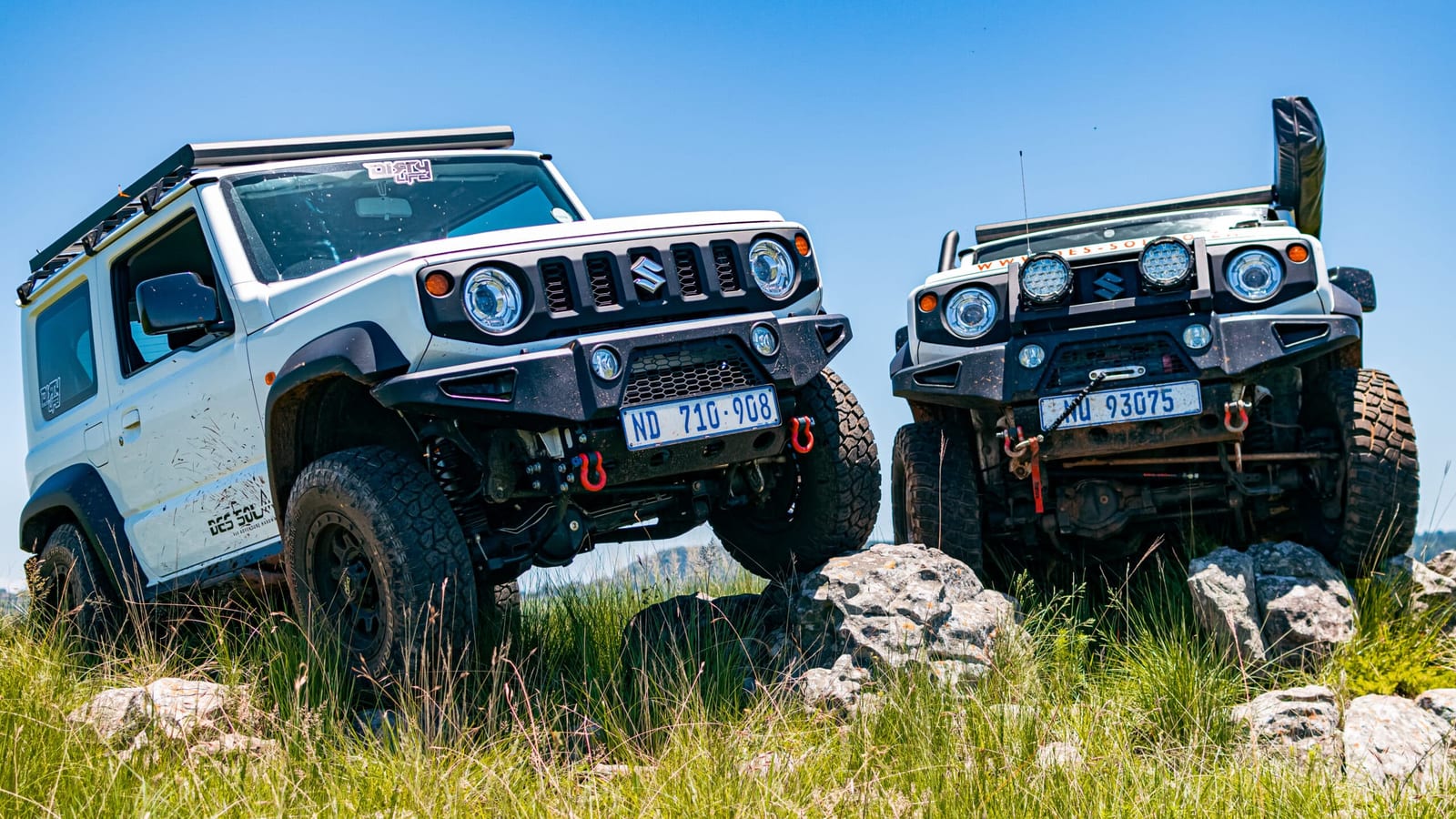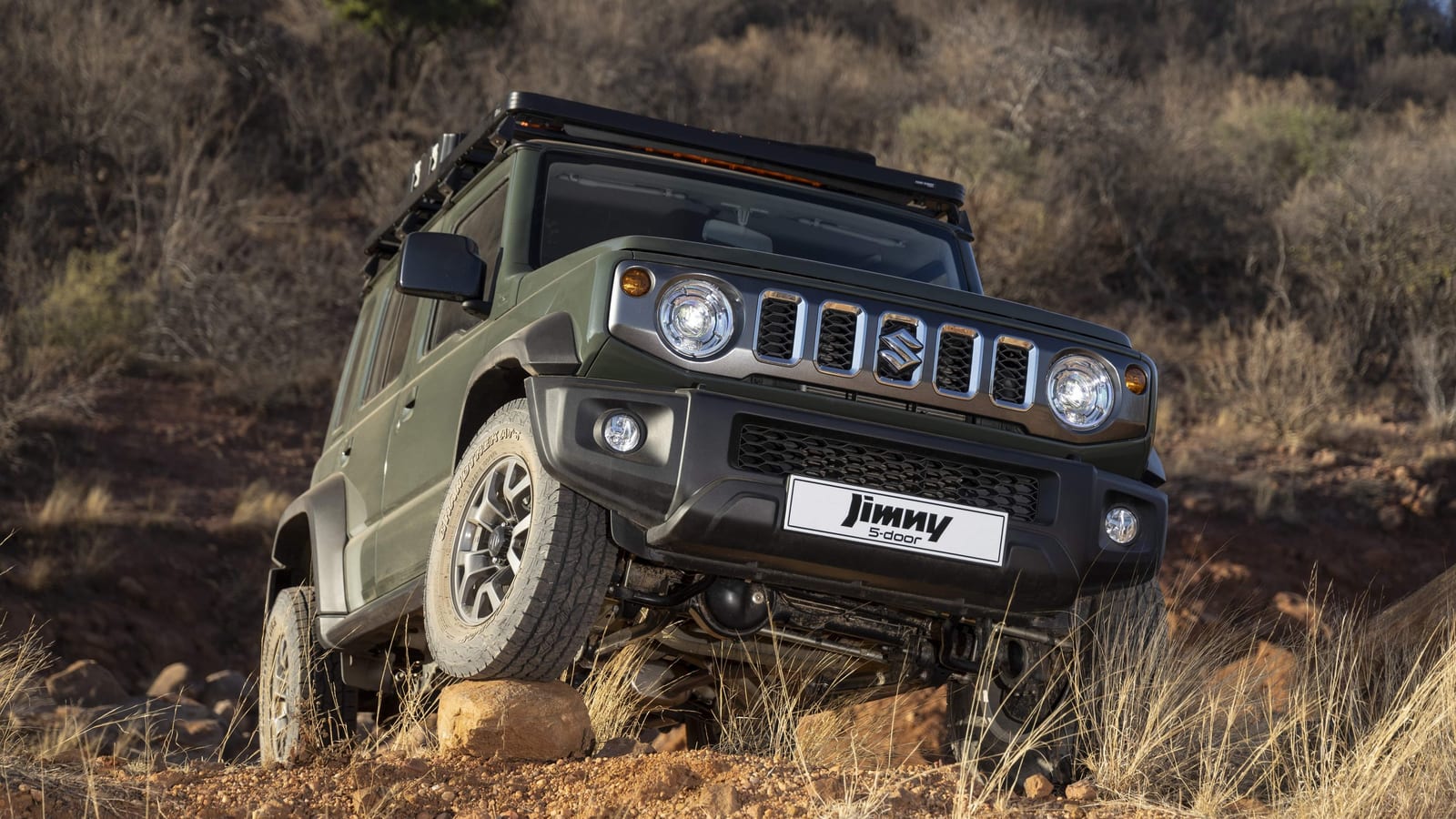
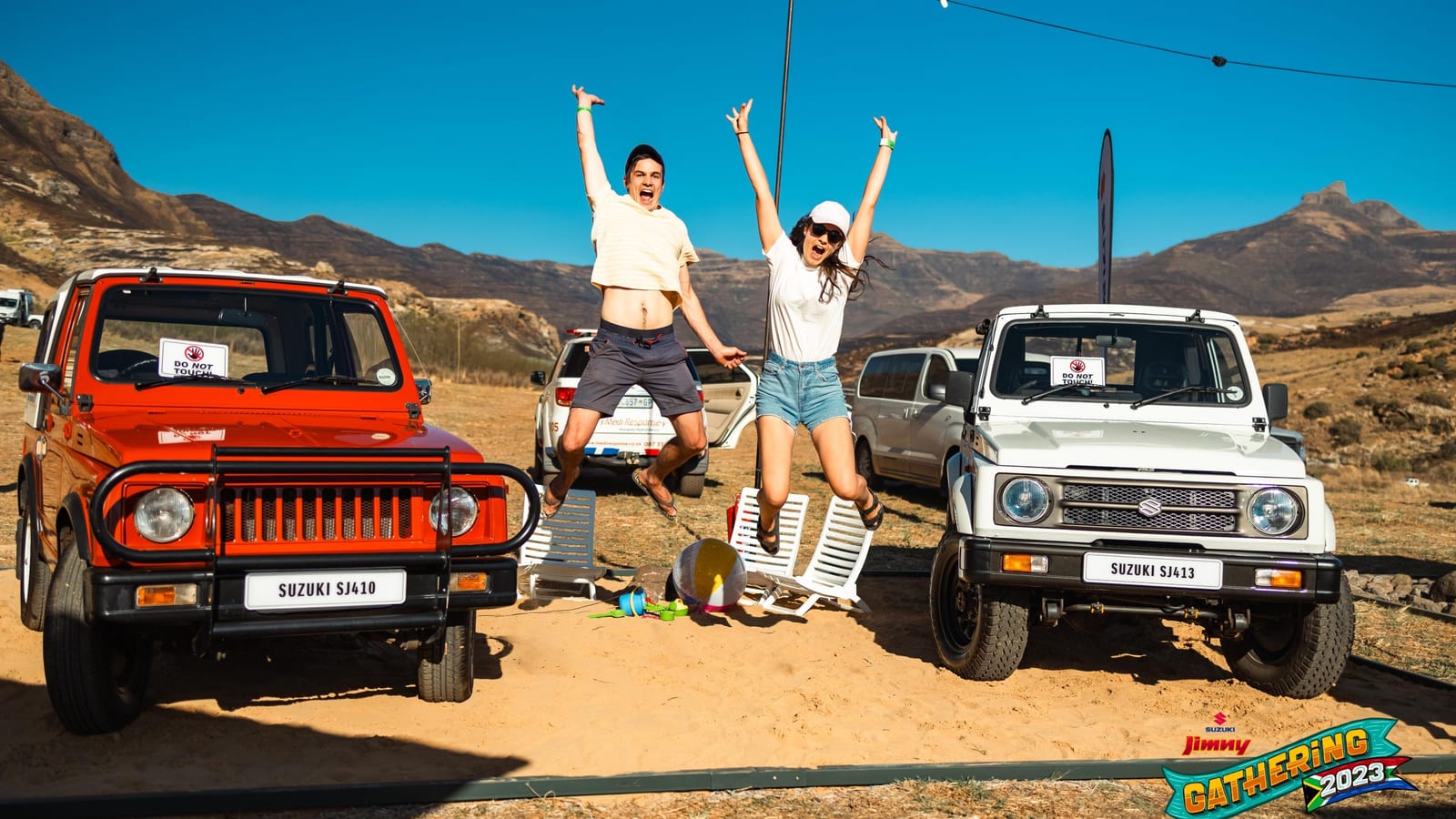
Cover photo: Suzuki Auto South Africa, from its heritage display at the 2023 Jimny Gathering in Clarens. Thank you to the Suzuki SA team for keeping the old cars on show.
The Suzuki Jimny has had four generations since 1970. In South Africa, each one has a life of its own. There is the SJ your uncle rebuilt with a Nissan 1400 engine. There is the old-shape 1.3 that took a young couple all over Namibia. And there is the new one, which sold out before it reached the showrooms.
This guide covers each generation in plain words. It says when each one came to South Africa, what the codes mean, and why this small car has such a big following here.
The short answer
- The first Jimny: April 1970, in Japan. It was tiny, with three seats and a 360 cc engine.
- In South Africa: Suzuki’s own company has sold the Jimny here since 2008.
- The current Jimny: in South Africa since 2 November 2018. Owners call it Gen4.
- The 5-door: in South Africa since November 2023.
- What never changed: a separate ladder frame, solid axles and low range, in a small, light car.
The four generations at a glance
| Generation | Years | What locals call it | Engine | In South Africa |
|---|---|---|---|---|
| 1st | 1970 to 1981 | LJ | 360 cc two-stroke, later an 800 cc four-cylinder | A few survive, mostly as heritage cars |
| 2nd | 1981 to 1998 | SJ, SJ410, 413, Samurai | 1.0, later 1.3 | Still driven, rebuilt and taken to club days |
| 3rd | 1998 to 2018 | Old shape, Gen3, the 1.3 | 1.3 petrol | Sold new by Suzuki SA from 2008 to 2018 |
| 4th, 3-door | 2018 on | New Jimny, Gen4 | 1.5 petrol | On sale since 2 November 2018 |
| 4th, 5-door | 2023 on | The 5-door | 1.5 petrol | On sale since November 2023 |
Years are when each generation was built in Japan, except where the table says South Africa.
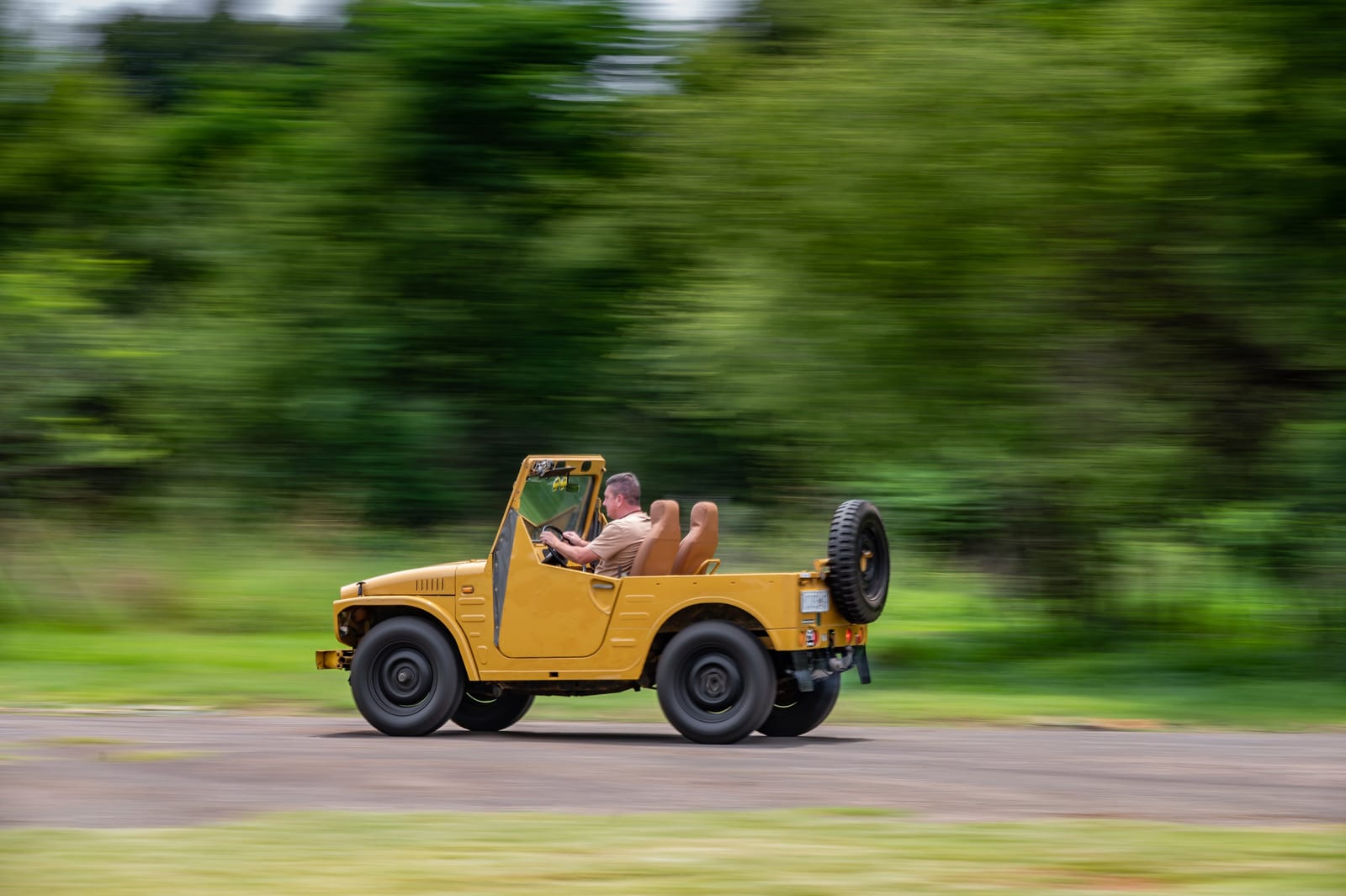
First generation: the LJ (1970 to 1981)
The Jimny started as another company’s idea. In 1968, Suzuki bought a small Japanese firm that had built a tiny off-roader. Suzuki kept the design and made it its own.
The first Suzuki Jimny, the LJ10, went on sale in Japan in April 1970. It had three seats and a 360 cc two-stroke engine. It was built for Japan’s tiny-car class, which sets strict limits on size and engine.
The LJ grew over the decade. By 1977, the LJ80 had a four-cylinder engine of about 800 cc. Suzuki’s own South African history says the LJ80 created a whole new market for fun 4x4s once it reached Europe.
Few LJs live in South Africa today. You are most likely to see one on a heritage stand at a Jimny Gathering. One old hand on 4x4community remembers an LJ10 at work on the Cahora Bassa dam in Mozambique in the early 1970s.
Second generation: the SJ and the Samurai (1981 to 1998)
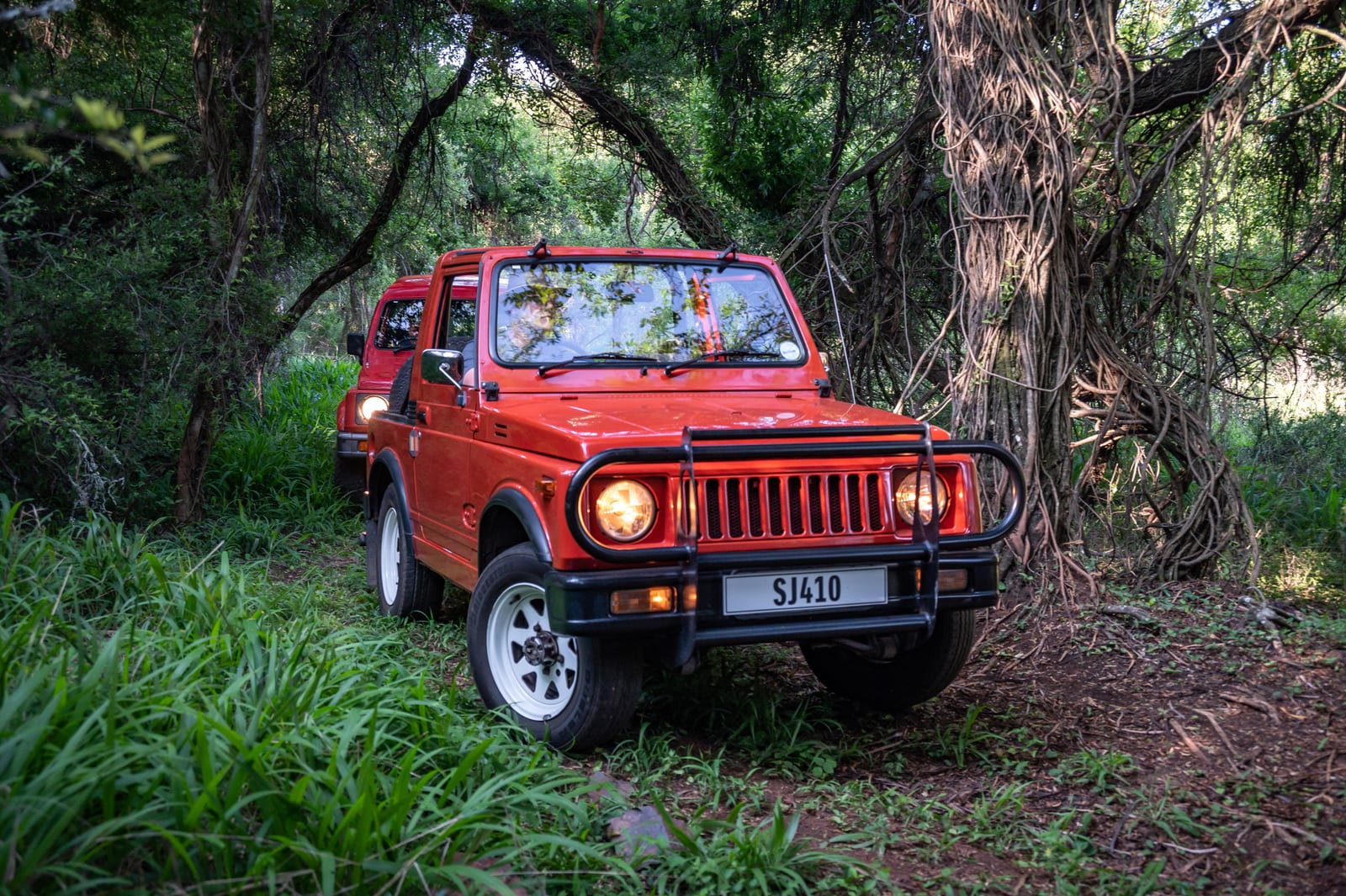
The second generation arrived in 1981. Outside Japan it was sold as the SJ410, with a 1.0 petrol engine. The SJ413 followed in November 1984, with a 1.3.
In the United States it went on sale in 1985 as the Samurai. That name spread to many other markets. In South Africa, owners call the old square Suzukis SJs or Samurais, and often both. Some even call the older LJs Samurais.
Suzuki SA’s own history page called the SJ410 a real giant-killer off-road. Some owners still argue that the old SJ is better in the bush than any Jimny since. It has a wheelbase of about 2 m, and it weighs under a ton.
The SJ has a real folk life here. It is the matric car, the varsity car, the farm runner and the weekend project. One Tzaneen owner still has the SJ he bought as a student in 1983. All three of his sons drove his old SJs to varsity in Pretoria.
When the engines get tired, many owners fit the engine from a Nissan 1400 bakkie. It is the classic South African swap, and the 4x4community Suzuki forum has thread after thread on it. Owners also have a word for the short second lever that selects low range: the kort stokkie, Afrikaans for “short stick”. Even Suzuki SA uses it.
So when did the SJ first go on sale in South Africa? We do not know. We have found no reliable source for it. Suzuki SA says only that its cars were sold here through General Motors dealers until 2004. What we do know is that SJs and Samurais are still here, and still driven.
Buying an old SJ today
An SJ is now about 30 to 45 years old. The early ones are narrow, and they tip more easily than a modern car. Suzuki made the track wider around 1988 for that reason. There are no airbags and no ABS.
Owners who love them say the same things. Check for rust, both the coastal kind and the inland kind. Expect a fussy carburettor. Treat it as a weekend car, and take the highway slowly in a crosswind. Our common problems guide covers the newer cars in more depth.
Third generation: the old shape (1998 to 2018)
The third generation came out in Japan in 1998. From then on, the car wore the Jimny name in every market. It moved to coil springs at both ends, which gave a softer ride than the SJ’s leaf springs. It also dropped the kort stokkie. You choose 2WD, 4WD or low range with a switch on the dash instead.
South Africans call it the old shape, Gen3 or just the 1.3.
When it came to South Africa
In February 2008, Suzuki said its cars would return to South Africa that year. It set up its own local company, Suzuki Auto South Africa. The Jimny was in the first line-up, with cars due in showrooms by mid-2008.
Suzuki SA then sold the older Jimny here until 2018. Here is how the South African car looked in Suzuki’s own 2012 brochure.
| Older Jimny, SA spec (2012) | Figure |
|---|---|
| Engine | 1.3 petrol |
| Power | 63 kW |
| Torque | 110 Nm |
| Gearbox | 5-speed manual |
| Low range | Yes |
| Tyres | 205/70 R15 |
| Towing | 1,300 kg |
| Weight, empty | 1,060 kg |
Source: Suzuki Auto South Africa Jimny brochure, 2012. Some owners do advertise a 1.3 auto, but we found no Suzuki SA date for it.
Owners loved it for its character and its tough, simple build. They were also honest about it. The 1.3 runs out of breath on long hills and at 120 km/h. But it was a daily driver on weekdays and a real 4x4 on weekends. One owner sold his 2011 car to his parents after the first baby arrived. Years later he borrowed it again, and he found it still full of character.
Suzuki SA sold 9,232 of these Jimnys between 2008 and 2018. Our Jimny 1.3 model page covers this generation in more detail.
Fourth generation: the current Jimny (2018 on)
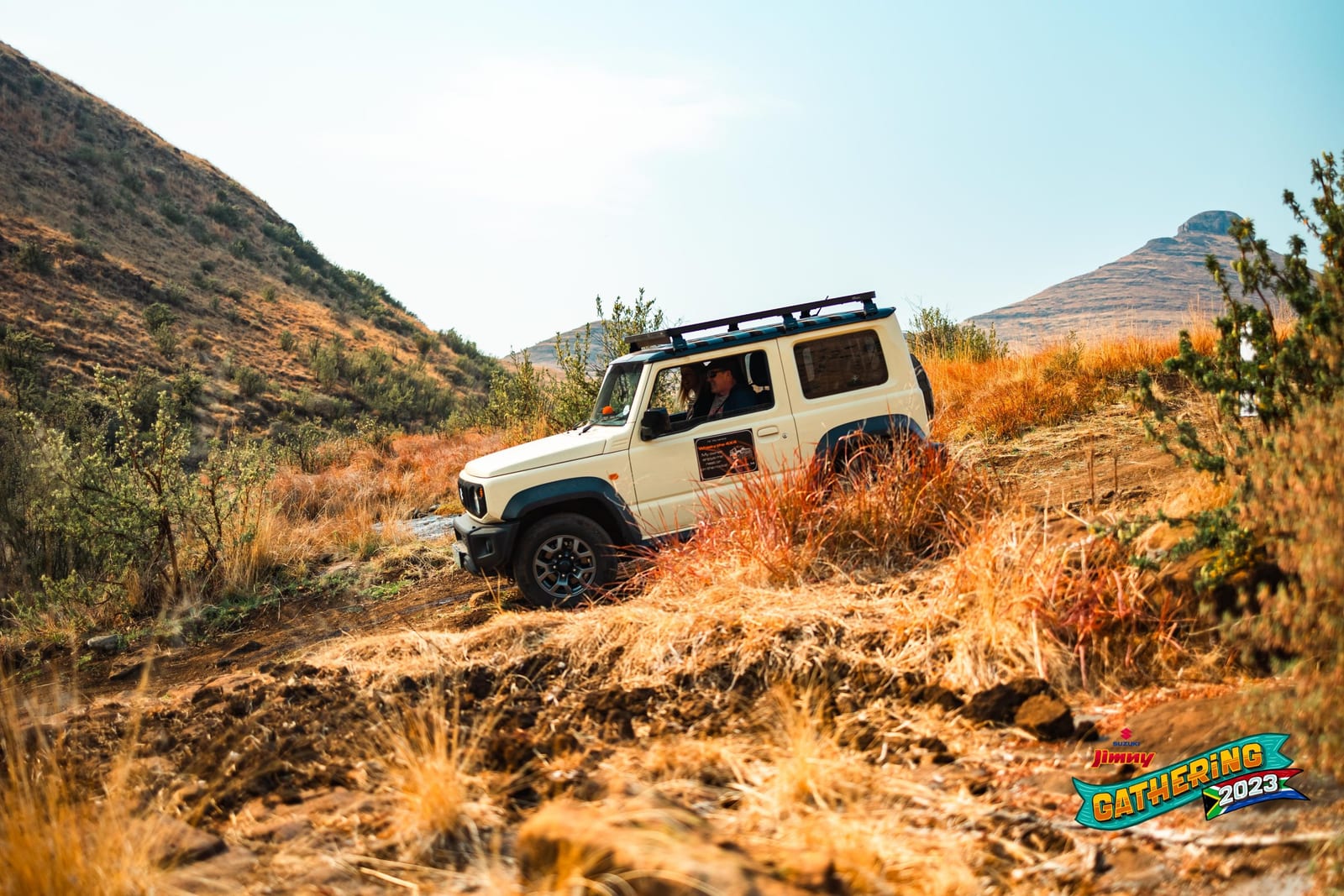
The current Jimny was the first all-new Jimny in 20 years. It went on sale in South Africa on 2 November 2018. A month before launch, Suzuki SA said the first two shipments had already sold out.
It uses a 1.5 petrol engine with 75 kW. You can have a 5-speed manual or a 4-speed auto. And the second lever is back: Suzuki calls the 4x4 system AllGrip Pro, and you pick 2WD, 4WD or low range with a short lever.
What does JB74 mean?
JB74 is Suzuki’s own code for the current 3-door Jimny with the 1.5 engine. That is the car sold in South Africa since November 2018. The 5-door is coded JC74. Nobody here says JB74 out loud, though. Owners call it Gen4 or the new Jimny.
From 2018 to today
The launch line-up had two trims, the GA and the GLX. The GL was added in March 2022, between the two.
| Current Jimny 3-door | Price in November 2018 | Price in September 2026 |
|---|---|---|
| GA manual | R264,900 | No longer sold |
| GLX manual | R299,900 | R444,900 |
| GLX auto | R319,900 | R466,900 |
Sources: launch price report, 2 November 2018; Suzuki Auto South Africa, 23 September 2026. Today the 3-door is sold as a GLX only.
The new car took off. Suzuki SA sold 11,090 current Jimnys in about five years, up to November 2023. That is more than the older Jimny sold here in ten years. For the trim choice, see our GL vs GLX guide.
The 5-door (2023 on)
The 5-door is built in India. Its wheelbase is 340 mm longer than the 3-door’s, which gives it back doors and a bigger boot. It uses the same 1.5 engine.
It reached South Africa in November 2023. At launch, the GL manual cost R429,900. Our 3-door vs 5-door guide and 5-door review cover the choice today.

Awards
The current Jimny won 2019 World Urban Car at the World Car Awards. At home, it won the Lifestyle Utility category at the 2019 South African Car of the Year. The overall winner that year was the Mercedes-Benz A-Class.
The South African following
The club scene is older than the new car. In 2010, Suzuki SA ran a “40 years of 4x4” Jimny campaign, with owner clubs in Gauteng and the Western Cape. Suzuki Auto Club SA started in November 2009. It still runs days at Gauteng venues such as Kungwini, Groenkloof and Spookspruit.
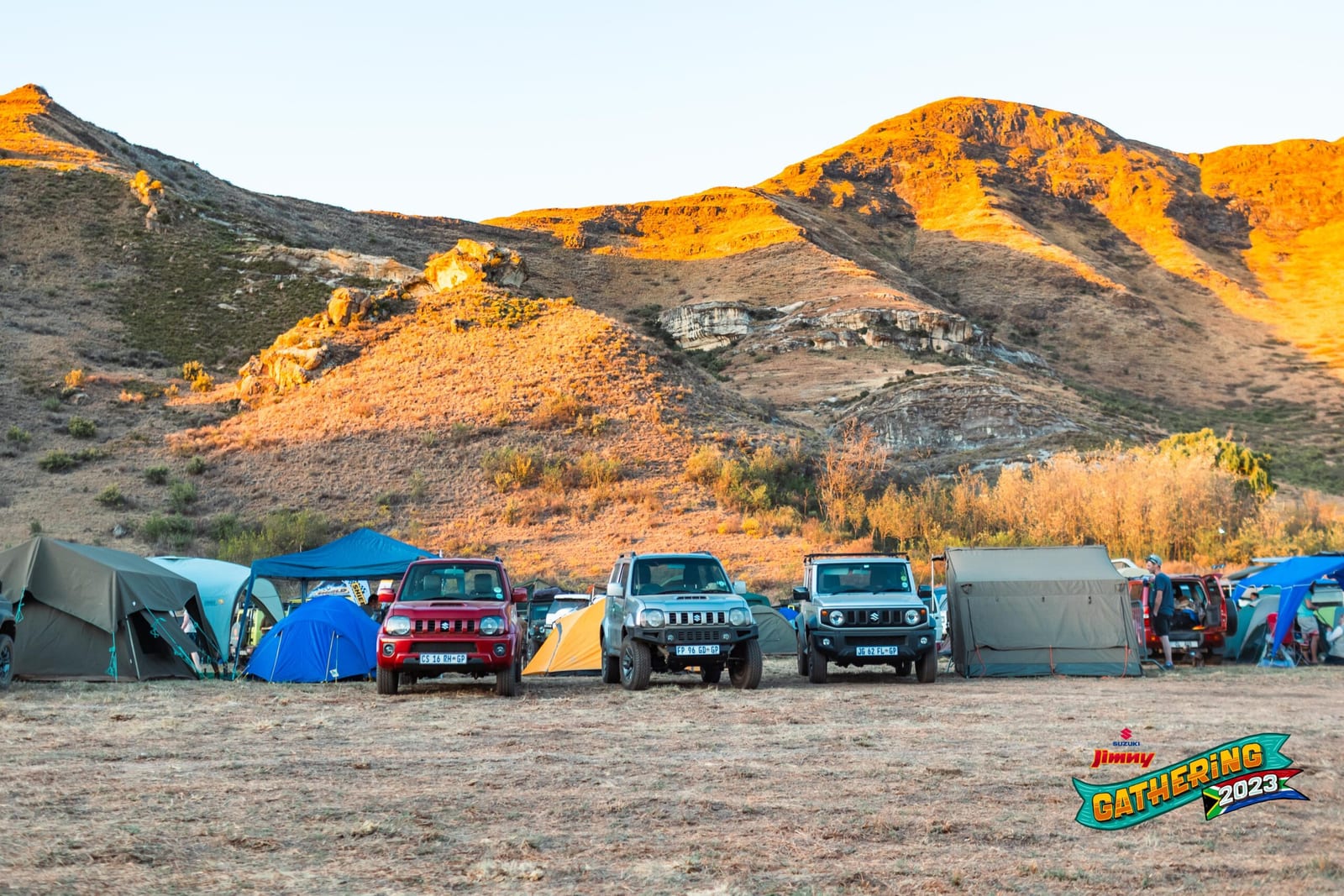
The current Jimny turned the clubs into something much bigger. In 2021, a big club run drew about 55 cars. Then Suzuki SA began its own Jimny Gathering.
| Gathering | Where | Cars | Guinness World Record |
|---|---|---|---|
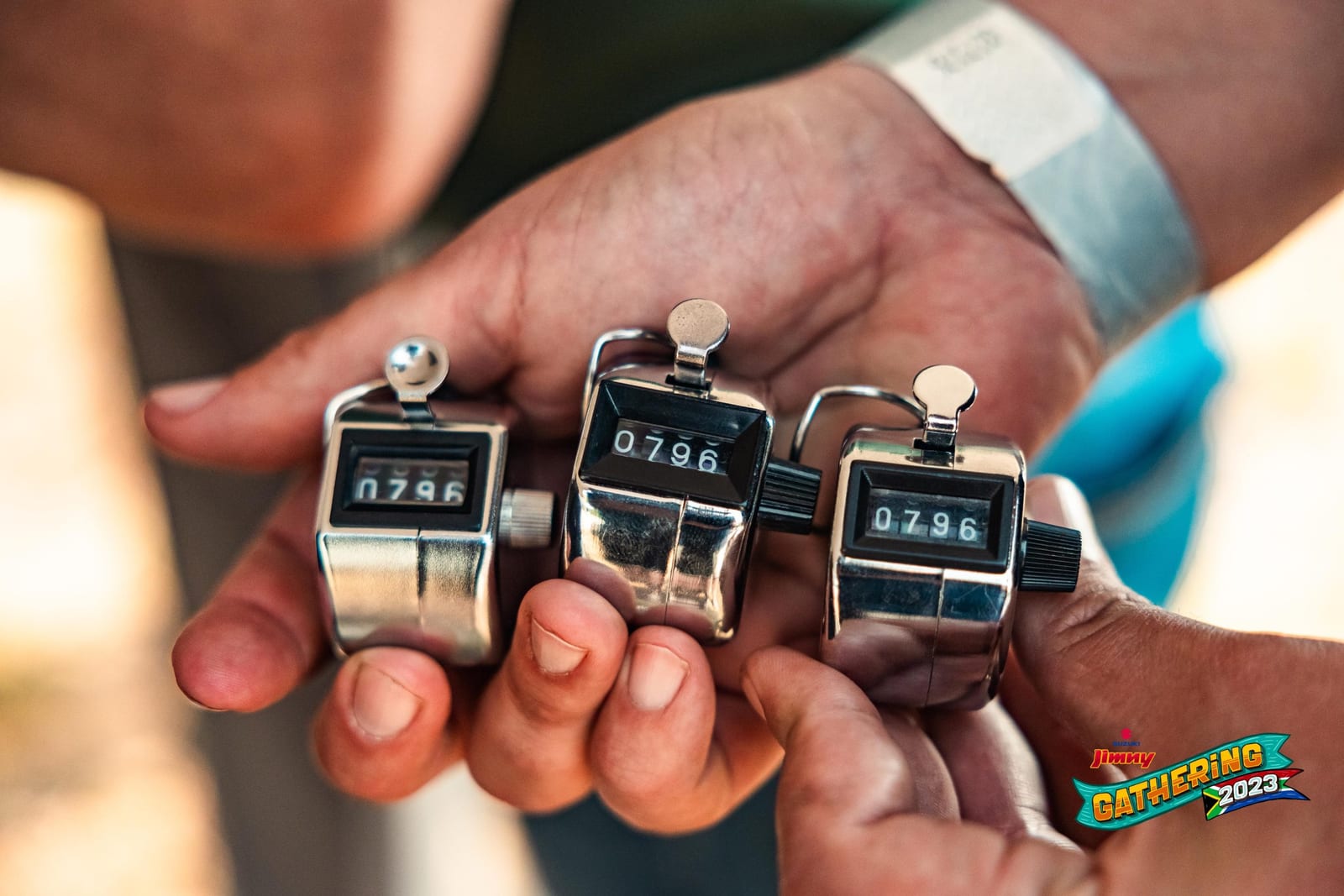
| 2023 | Clarens, Free State | 796 | Most cars to switch on their lights at the same time: 787 did it together |
| 2025 | Louvain Guest Farm, Western Cape | 1,127 | Most car doors closed at the same time: 1,838 doors |
Sources: Guinness certificate, 24 September 2023; CAR magazine, 29 September 2025.
Owners say the 2025 record was a door slam to celebrate the 5-door’s extra doors. The field was not just new cars, either. LJs, SJs and Samurais took part too. On the way there, owners on 4x4community described hordes of Jimnys on the N1 and N9, with about 150 of them stopping over at Gariep Dam.
And when two Jimnys pass on the road, the drivers wave. CAR magazine calls the Jimny Wave one of the unwritten Jimny rules.
What each generation costs today
Even the oldest Jimnys Suzuki SA sold here still ask well over R100,000. These are asking prices on live listings, read on 23 September 2026.
| Generation | On sale now | Most ask between | A typical one asks |
|---|---|---|---|
| Older 1.3 (2008 to 2018) | 193 | R130,000 and R240,000 | About R190,000 |
| Current Jimny, used (2018 to 2025) | 970 | R290,000 and R400,000 | About R350,000 |
These are asking prices, not sale prices. LJs and SJs are too few to count. For prices by model year, see our price by year guide. To see what a car is worth, try the Jimny valuation tool or the live market data.
The bottom line
The Jimny has kept one recipe for more than 50 years: a small, light car on a ladder frame, with solid axles and low range. The LJ started it in 1970. The SJ gave South Africa its matric cars and farm runners. Suzuki’s own company brought the old-shape 1.3 here in 2008. The current Jimny arrived in November 2018, sold out before it reached showrooms, and filled a Free State field with 796 cars five years later.
If you are shopping, start with the latest Jimny listings and our accessories guide. And wave when you pass another one.
A big thank you to Suzuki Auto South Africa for the heritage photos and to the Jimny Gathering team for the event photos. Go and see the old cars on show at the next Gathering.